Arrow Season 8 Ending Explained. The eighth and final season, which consists of ten episodes, of the American television series Arrow aired on The CW from October 15, 2019 to January 28, 2020. Based on the DC Comics character Green Arrow (a costumed vigilante created in DC Comics by Mort Weisinger, George Papp), the series is set in the Arrowverse and shares continuity with other Arrowverse TV series and associated media.
Marc Guggenheim, Beth Schwartz, and Beth Schwartz were the executive producers for this season. Principal cast members David Ramsey, Rick Gonzalez, Juliana Harkavy, and Katie Cassidy, who played Laurel Lance in previous seasons, returned to serve as co-showrunners.
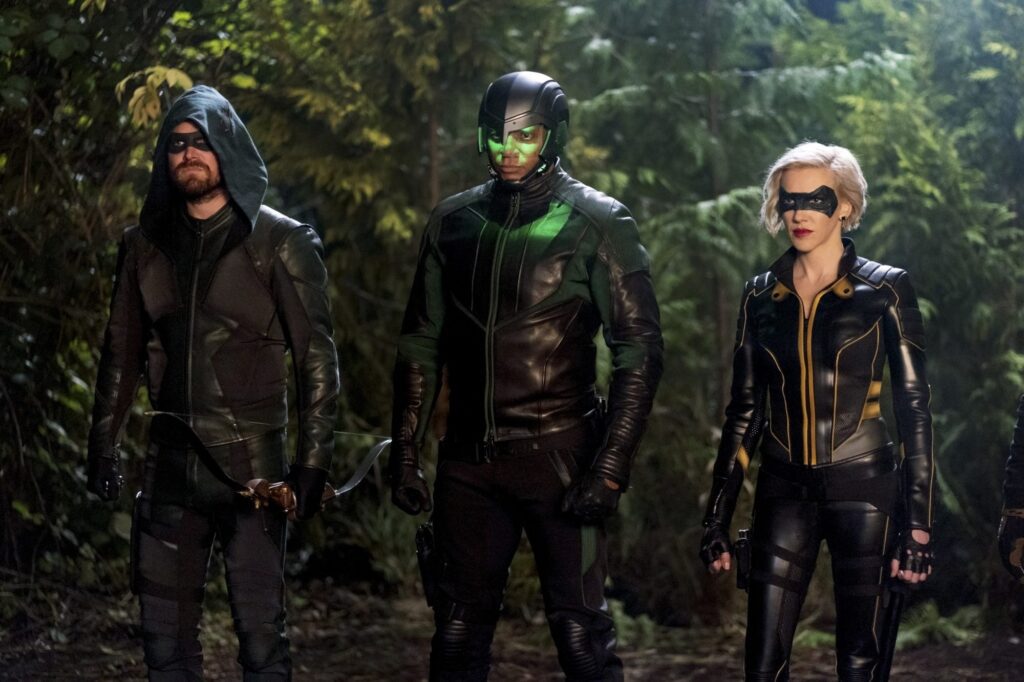
Ben Lewis, Katherine McNamara and Joseph David-Jones, previously appearing as adult versions of Mia Smoak and William Clayton, were promoted to starring roles. LaMonica Garrett also stars as the Monitor across Arrowverse shows. The series’ former regulars include Susanna Thompson and Colin Donnell as well as John Barrowman and Colton Haynes, and LaMonica Garrett, who stars as the Monitor on multiple Arrowverse shows.
The season follows Oliver as he fights against corruption in a multiverse. Filming began in Vancouver (British Columbia) in July 2019. The sixth Arrowverse crossover episode “Crisis on Infinite Earths” is featured in the eighth episode. Other TV series Supergirl (Batwoman), The Flash, Legends of Tomorrow took part. The ninth episode is a backdoor pilot for the later-scrapped spinoff titled Green Arrow & the Canaries, which takes place in the year 2040.
May Also Like : Hellraiser 2022 Ending Explained : What’s Happened ?
SYNOPSIS OF ARROW SEASON 8
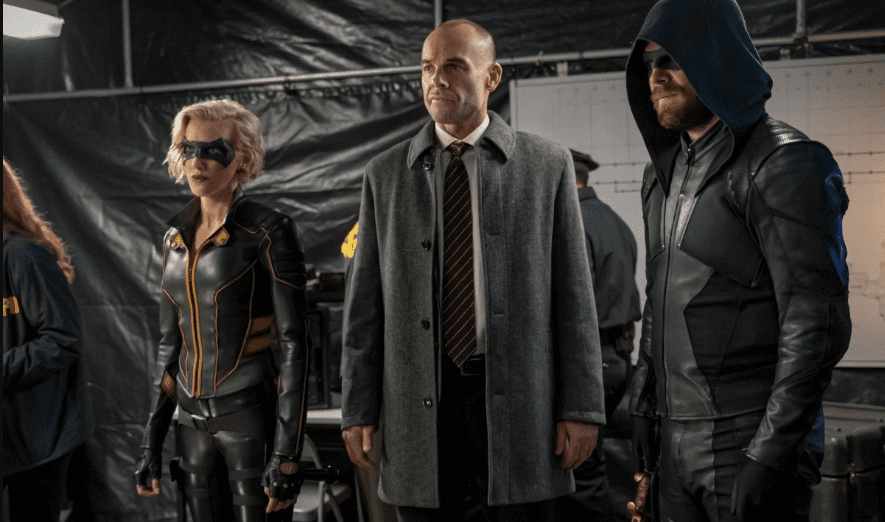
Billionaire playboy Oliver Queen was lost in a shipwreck and thought dead for five years. Two men on a fishing boat found him alive on an island off the North China Sea. He returned to Star City determined to right the wrongs of his family and fight injustice.
Oliver, as the Green Arrow, saved his city with the help of his team, which included Felicity Smoak (computer-science expert), John Diggle, Dinah Drake (meta-human), Rene Ramirez (street-savvy), Curtis Holt (inventor), Roy Harper (protégé) and Earth-2 Laurel Lance.
Last season’s finale (“You Have Saved This City”) saw Oliver leave behind his family and friends to face his most difficult battle yet. One that will put the multiverse in jeopardy. In Arrow‘s last season, Oliver Queen must face the truth about what it means to be a superhero.
REVIEW OF ARROW SEASON 8
Oliver Queen is now gone, leaving behind an incredible legacy. Now it’s time for us to review the 10 most recent episodes of the show that launched the massive DC universe on CW.Oliver Queen is now gone, leaving behind an incredible legacy. Now it’s time for us to review the 10 most recent episodes of the show that launched the massive DC universe on CW.
Stephen Amell plays the role of Oliver Queen/the Green Arrow once again. The cast includes David Ramsey, Katie Cassidy and Rick Gonzalez as well as Katherine McNamara, Ben Lewis and Joseph David-Jones. LaMonica Garrett, the Monitor, has been added to the cast. Emily Bett Rickards, Felicity Smoak’s character, is absent from the main cast. However, she does appear in some scenes, just like many other Arrow characters.
This season was not perfect, I must admit. Although it’s not as good as season 5, there are a few issues, especially with the last two episodes. While I will get into the negatives in a moment, I want to first discuss the positives of the season. The final season of Arrow, according to CW standards, was surprisingly true to the show’s core. It reflected the dark past and legacy of Oliver Queen, while setting up Crisis for his grand sendoff.

Season 8 was a great season. It didn’t make the same mistakes as previous seasons. Drama, or the lack thereof, was a huge improvement. Although I don’t mind that season 8 was cut to half the usual number of episodes, it did leave less room for drama. The majority of drama in this season was caused by Oliver’s acceptance of his death in Crisis. I also learned how his legacy will continue to live on. This was fine, I thought. Felicity wasn’t there for most of the season. This could also explain the lack of unnecessary drama.
The season 7 flash forwards featuring William, Mia, and Connor in 2040 was another problem I had with this show. Although I liked the concept of flash forwards when they first appeared, I soon grew bored of them. They were added to the storyline to take up more time. I was also not invested in it, as it seemed unnecessarily complicated. There are a few flashbacks in Season 8, but then the future characters are brought into the present, and it suddenly becomes much more interesting.
The relationship Oliver has with Mia today was what attracted me most. It reminded me of Barry’s relationship with Nora in The Flash. Oliver assumes the role of mentor and passes the Green Arrow torch to his daughter. It was clear to me that he was not just giving her the skills to be a hero but also teaching her how to avoid making the same mistakes as him.
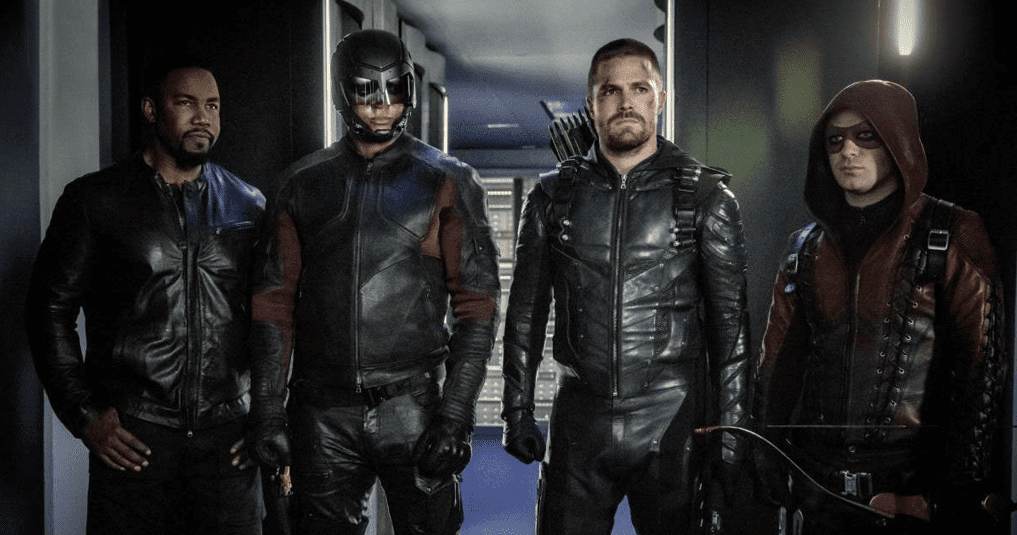
The last season did a decent job paying tribute to Arrow History. I think the Undertaking on Earth-2 premiere was my favorite moment in the season. It took something that long-time fans knew and changed it to make it new. Others, such as Oliver’s return to Russia, the Hong Kong episode featuring China White and Fyres’ appearance on Lian Yu, all bring back memories with just enough change to make them seem new.
A few supporting characters from different seasons get their final moments on the show. Thea, Roy and Katana all get their moments in the spotlight, but they don’t steal the show. 8×06 “Reset” was my favorite episode, excluding the crossover. It dealt with Quentin’s passing while showing Oliver that he cannot deny his own death. It was an effective way to include Quentin’s character while also relating the homage of the character to the story.
The last two episodes, while not terrible, brought down the season. These episodes had some things I enjoyed, such as Mia becoming the Green Arrow of 2040 and Diggle receiving the Green Lantern Ring. However, overall, these episodes were not that memorable compared to previous episodes.

Although I won’t deny that 8×09 “Green Arrow & the Canaries” was bad, I did enjoy it. It was a decent episode and on par with other Arrowverse shows. It felt out of place because it was a backdoor pilot for an Arrow Mia Queen spinoff. Although I find the show’s premise interesting, I found it a bit odd that the pilot was released the week before the finale.
The finale was fine, except for the William subplot. The entire kidnapping storyline brought in a random demon from Oliver’s past that we have never seen before. I would have expected the villain to be someone we knew, which would have made things more cohesive. This felt like a case of CW filler and a reason for everyone to get dressed up one last time.
The final scene with Felicity was a reminder of my personal problem in the Arrowverse. It seems that heroics are being sacrificed for sappy romance. It may be appealing to those who love “Olicity”, but it is not my cup of tea. Although the concept is interesting, the scene was just too cringeworthy. This was also the final scene of Arrow. This is the best ending of all the possible ways that the show could have been.
ARROW SEASON 8 : THE END EXPLAINED

Arrow is officially done after eight years and 170 episodes. The DC TV Superhero Universe’s granddad said goodbye to “Fadeout”, an emotionally satisfying hour that paid tribute both to Oliver Queen, who recently passed away, and the legacy of the show (superhero) that bears his name.
Many people wondered what Arrow would do with its last two episodes after its lead man was killed twice in the Crisis on Infinite Earths crossover. Many of us, including me, may have assumed that Oliver would miraculously be resurrected. He would still be the DC TV Universe’s figurehead, but he will be available for the next major network multi-series event. This is not the case.

Arrow spends its last hour exploring what most superhero stories don’t bother to tell: the part after the fight’s over. It’s when we must face the reality of a life’s work, our legacy, and the reasons why we fight. Arrow‘s end is darker than we expected. However, it’s still cathartic and emotional. It reminds us why Oliver Queen’s story matters before finally showing us his happy, even if slightly bittersweet, ending.
Oliver Queen is Really Dead

Arrow doesn’t try to undo the past in this finale, which is perhaps the most surprising twist of events. Oliver Queen is truly and sincerely dead. There are no false starts. There are no takebacks. The events in Crisis on Infinite Earths were final. Oliver’s actions created a new world, but he paid the price by his own death.
It’s a good way to go out for a street-level rich kid vigilante. It’s Oliver’s hero’s demise, which he deserved and was likely always meant for. The miracle is that Arrow finally decides to make his sacrifice pay by making it stick. Oliver doesn’t make an appearance in flashbacks outside of the episode’s last scene. This is probably a testimony to his power and larger impact on Star City as well as the greater impact Arrow has had on the world.
Who Was at Oliver Queen’s Funeral?

His sacrifice brings back many characters that were previously deceased, including Moira Queen, Quentin Lance, Tommy Merlyn, Emiko, Oliver’s half-sister, and Tommy Lance. It gives them a second chance at life. Oliver’s funeral will bring back twelve of our favorite characters from the eight seasons of the show, including Oliver’s sister Thea, the grown-up version of Oliver, Legends of Tomorrow’s Sara Lance and Supergirl’s Kara Zor El.
Talia al Ghul and Nyssa even showed up to pay respects to the man who was once their enemy. The dramatic shot of Oliver’s mourners at his burial site shows how many lives he has touched and the impact he has had on them over the eight seasons.
What’s Next for the Arrow Team?
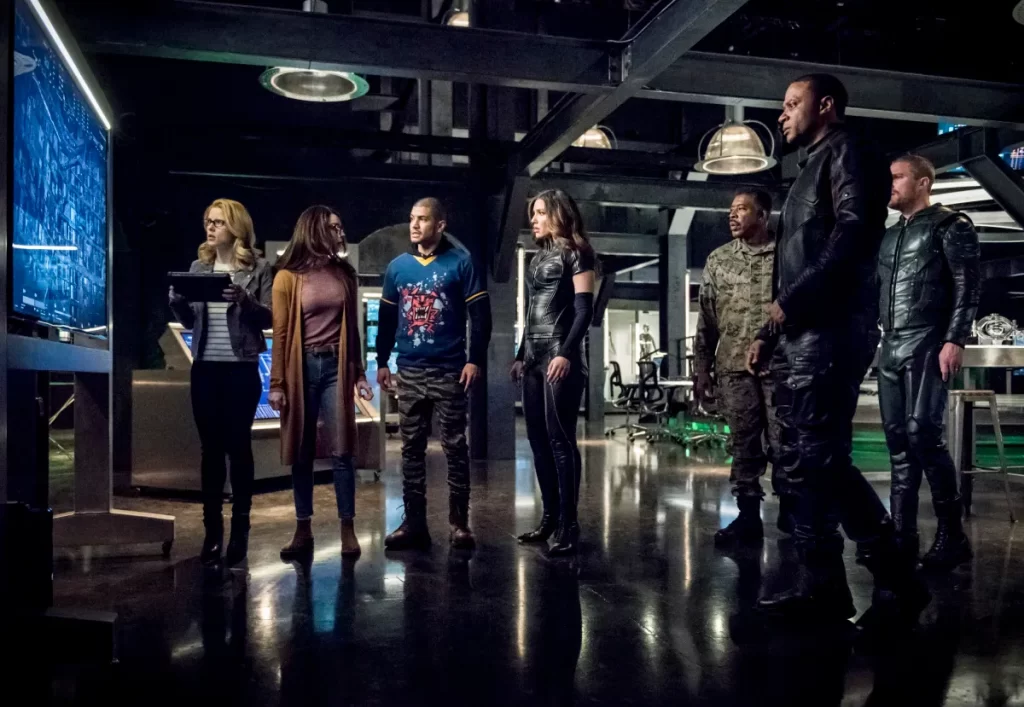
“Fadeout” doesn’t only focus on the main character’s journey, but also what he and the show leave behind. Although Arrow may have started with one man, the story ends with a group of dedicated heroes ready to take Oliver’s bow ( literally, in his case) into battle for the world he longed for.
“Legacy. What is a legacy? It’s the act of planting seeds in a place you will never see.” This is what a legacy looks like. Arrow is clear to agree, as its series finale is all about the next. Oliver is only the beginning of the story.
Arrow was a debut that almost no one could have imagined. It began as a story about a selfish boy with fancy technology, a mask, and a desire for revenge. It is a story of self-sacrifice, redemption and serves as an example of what superhero television can do and be.

Arrow has produced six spin-offs (The Flash and Legends of Tomorrow), Supergirl, Black Lightning and Batwoman to date), which creates a richly interconnected universe on screen that features many women, LGBT characters, and people of color from across its properties. What’s next? What’s next? It’s as much about hope and grief as it is about loss. Oliver is gone and that’s a tragedy. But he has taught a whole new generation how to be heroes. This is no small feat.
Oliver’s daughter is not the only one following her father’s steps (although it seems that her journey seems more literal than most). Rene is also running for public office. Thea and Roy are also running for public office. They choose each other, even when they have to face the bad guys. Laurel has fought for the change Oliver and Quentin thought she could be.
Sara is out there saving the world with a team full of weirdos. Barry is still going. Diggle will 100% turn out to be the Green Lantern, if we’re fortunate. These are the things Oliver is leaving behind, not a monument in his honour. To quote an old DC property, if you are looking for his monument, you can look around.
Olicity Final Scene: The Oliver and Felicity Reunion
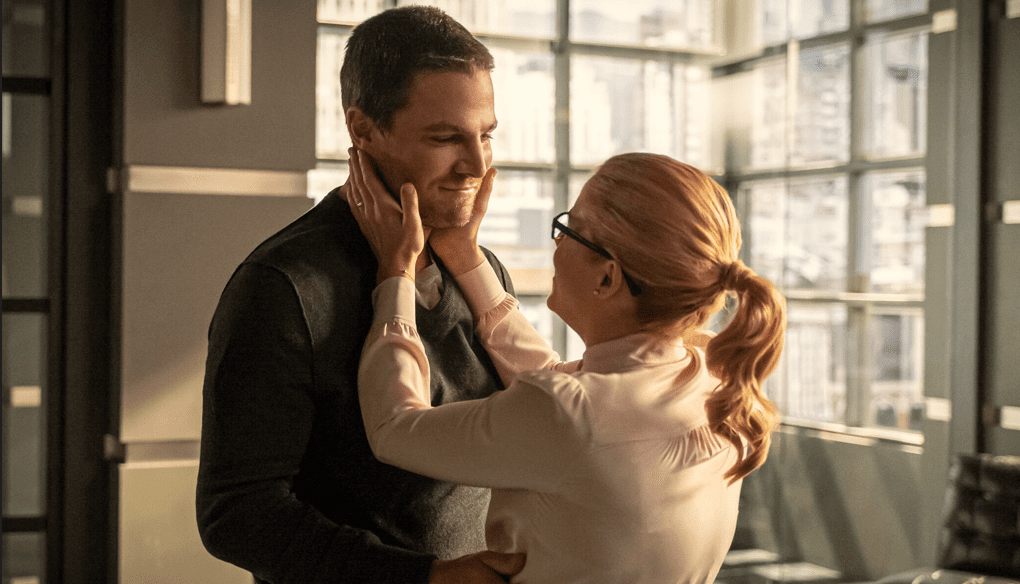
It turned out that Arrow knew exactly where it was going. It did, at least since Season 7’s finale. We could have probably figured it out if we had been paying more attention – even a happy ending to an Arrow is always bittersweet.
“You Have Saved This City” suggested that Oliver was waiting at the end, wherever Felicity of 2040 was heading with the Monitor. “Fadeout” ends that loop and returns us to the moment when the show was at the portal’s other end.
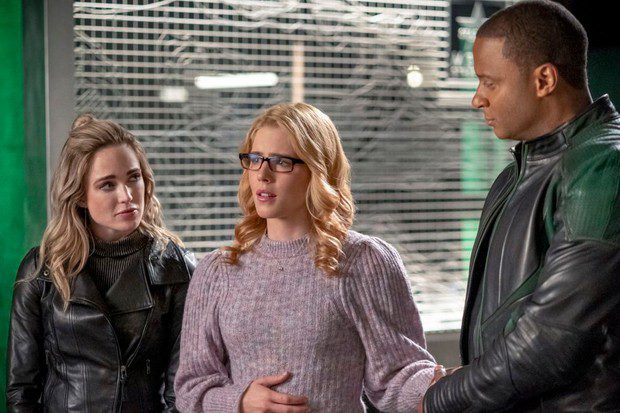
It’s Moira Queen’s office just like it was in Arrow Season 1. Even down to the red pen Felicity was using when Oliver first met her. Everything outside Queen Consolidated is sparkling and bright, and the sun shines. It is possible that Star City has never been so clean. It is beautiful.

Oliver appears and Felicity and Oliver embrace in one of the most satisfying and earned kisses in all of the multiverse. It’s more than a man reunited with his wife. It’s not just a man who is finally reunited with his wife after waiting half of her life to see him again. It’s all a promise. Oliver’s sacrifices were worth something. He finally got his reward. Now he has a chance to see the man he loved for eight years. Peace.
Arrow doesn’t exactly specify where Oliver and Felicity live, however. Is it possible that they are still alive, but in a heavenly afterlife. Is it possible that they are living in a perfect dream dimension? This is a hint at a parallel to how it ended for Lois Lane and the Golden Age Superman at the end of the Crisis on Infinite Earths comic. They were sent to a pocket dimension paradise to live together forever.
This is a Choose Your Own Adventure type of thing. Is it important? The afterlife theory is what I like. No matter where they live, the explanation remains the same. They have found happiness in each other and it is a happy ending that they deserve after all the years. We, the viewers, have also earned it. Oliver Queen, Felicity and their eternity together is the last time we see him. It is hard to imagine wrapping up more beautifully.