
This Blue Lock tier list ranks 30 major characters from strongest to weakest, based on what they do on the pitch and how much they change the story. The list covers the series up to the Neo Egoist League and the selection of the 23-player Japan U-20 squad, which is as far as I know the material well enough to judge. Later arcs may move some of these players, so read the ranking as a snapshot of that point.
Spoiler warning: the entries below reveal match results, eliminations, and which players make the national squad. If you are still early in the series, stop here and come back once you have caught up.
Blue Lock is a football series, so power in this list means skill, weapons, goals, and match impact. A talented character can still rank low if the story never lets that talent decide a game. I rank the players the way a fan who has followed every match would, and I make no claims about poll results, sales, or popularity figures. Every ranking here rests on what the story shows, not on what fans say about the characters.
How This Tier List Works
Every character is judged on three criteria. The first is power and feats: dribbling, finishing, speed, reading the game, and the moments where a player beat an opponent who was supposed to win. The second is impact on the story: whether a character forces others to change, whether their choices move the plot, and whether the series would feel different without them. The third is writing quality: whether the character has a clear arc and a motivation the author shows on the page.
Ties are broken by impact. A player who scores a decisive goal in a match that matters outranks one who performs well in a forgotten match.
- S Tier: players who decide matches by themselves and whose existence reshapes the series.
- A Tier: elite players who regularly swing games or carry a major storyline.
- B Tier: strong, dependable players with clear strengths and a real role in specific matches.
- C Tier: supporting players whose moments are memorable or useful to the plot, but whose influence is limited.
S Tier: The Players Who Decide Matches
These four are the players I would trust most with a match that could go either way. Each has a feat the story treats as decisive, not just impressive, and each forces a rival to rebuild their approach around them.
1. Yoichi Isagi

Isagi is the protagonist and the player who learns fastest from every opponent he faces. He watches what other strikers do well and folds it into his own finishing. The sources I checked name his decisive goal against Japan U-20 as the moment that settles a match the whole squad had been fighting through, and he scores for Blue Lock XI in that game.
He sits first because his growth is the engine of the story. Rin is the more naturally gifted striker at the start, but Isagi is the only player whose every match leaves him better than before. He is not the most talented player here, yet he is the one I would pick to win a match that matters.
2. Rin Itoshi

Rin is the top-ranked player in the early program and Isagi’s main rival, a striker whose confidence is backed by real ability. He is the brother of Sae Itoshi, and that family pressure shapes his play: every touch is a statement that he owes nobody anything. The rivalry with Isagi gives the early story its tension.
He sits second, not first, because his best moments prove he is the best rather than change how a match unfolds. When Isagi starts to read the game the way Rin does, the rivalry shifts, and Rin’s approach looks like one brilliant idea rather than a system that adapts. A player who makes everyone else better would outrank him, and Rin rarely does that.
3. Seishiro Nagi

Nagi is one of the most gifted forwards in the program, with a talent so natural that he often seems bored by the effort others put in. He is Isagi’s rival in the early stages and forms the Team V pairing with Reo Mikage. The sources I checked show him often relying on instinct over effort, which the program does not always reward.
He ranks third because his talent is the most dangerous thing on the list when it works. But the story rarely makes him win a long argument with himself. He is a brilliant player who loses the arc, and a tier list should reward impact, not just the highlight reel. That is the gap I keep coming back to.
4. Noel Noa

Noa is Bastard München’s Master Striker and, according to the sources I checked, the current world’s top player. He belongs to the Neo Egoist League, where a single striker has to be measured against the best in the world. His presence raises the standard of every match he plays in. Other strikers are measured against him whenever they share a pitch.
He sits fourth because his impact is the most narrowly defined. As a benchmark he is essential. But he carries fewer personal storylines than the three above him, and the series spends less time on how he changes. He is the most complete finisher I would put on a team, and the one I would least like to face.
A Tier: Elite Players Who Swing Games
The nine players here regularly change the result of a match or carry a major storyline. Each has at least one scene that proves their level. The difference from S is consistency: they dominate their moments but do not decide every match alone.
5. Meguru Bachira

Bachira is a dribbling forward and one of the first friends Isagi makes in the program. His playful control pulls defenders out of position and opens space for the players around him. His tricks look careless until they land, and then opponents realize how much work went into them.
He ranks fifth because his skill is more fun to watch than decisive. He is at his best creating chances rather than finishing them. On a team that needs a scorer he is less useful than the players above him, but he is hard to beat when a defense needs to come apart. That makes him a useful weapon for a team losing its shape, even if he is not the one who finishes the move.
6. Hyoma Chigiri

Chigiri is a speedy attacker whose early arc is built around fear. The story treats his injury-related doubts as a real obstacle. Watching him return to his signature style, with the pace and confidence that made him dangerous, is one of the more satisfying parts of the early series.
He ranks sixth because his comeback is emotionally strong, but his impact depends on the situation the team gives him. When he can run at a defense he is excellent. When he has to think through a crowded box, he is less certain, so players who combine speed with a clearer plan sit above him. His comeback is still the more important story beat, because the fear he overcomes is more personal than any goal.
7. Rensuke Kunigami

Kunigami is a striker known for fair play and a brotherly role toward his teammates. He is not the flashiest player in the program, but his commitment gives the forwards around him something they lack. He expects the whole team to succeed as a unit, and the story consistently rewards that approach over time.
He sits seventh because his value lies in supporting others rather than in moments that define a match. I put him in A Tier for consistency and for the trust he builds, which is a real skill even when it is not the most spectacular one. A team with a player like him has fewer collapses, and that matters more over a long run than one flashy move.
8. Michael Kaiser

Kaiser is a Bastard München forward and Isagi’s primary rival once the Neo Egoist League begins. His confidence and ambition make him one of the most aggressive players in the series, and the story uses that to make the league a personal test for the protagonist.
He ranks eighth because his role leans heavily on the rivalry. He is dangerous and his ambition is clear, but I want more evidence that he can beat the very best without the story setting up the result. He is a good antagonist, and his writing is stronger than his body of work so far. He is most useful as a direct challenge for Isagi, and he is at his best when the story puts him in Isagi’s way.
9. Sae Itoshi

Sae is the highest-ranked U-20 player in the sources I checked and the brother of Rin Itoshi. His status alone shapes how other characters think about themselves. Ryusei Shidou idolizes him, and the story treats Sae as the standard others are measured against, which gives him a presence beyond his on-screen minutes.
He ranks ninth because his influence is mostly indirect. Others react to him, but his own feats matter less to the plot. I would rank him higher if the series gave him moments where he solves a problem himself. As it stands, his reputation does some of the work his actions should do. A scene where he decides a match would lift him toward the top of this tier.
10. Reo Mikage
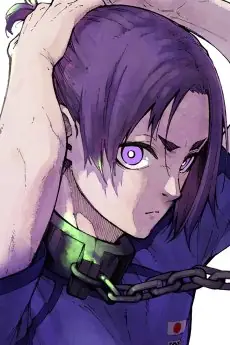
Reo can replicate the abilities of opponents, which makes him one of the most tactically interesting characters in the program. He partners with Seishiro Nagi in Team V, and the mix of Reo’s adaptability and Nagi’s raw talent gives the team a flexible threat.
He ranks tenth because his ability works best as a tool for others. He is excellent when the team already has a strong player to copy from. When he has to create something new under pressure, the story leaves him less room to show what he can do, so I think his concept is smarter than his on-pitch decisiveness. It is one of the cleverest ideas in the series, which is why he stays in A Tier even without many decisive scenes.
11. Shoei Baro

Baro is a selfish striker who becomes Isagi’s rival and makes the Japan U-20 squad. He is willing to ignore the team to get the goal he wants, which makes him a sharp foil for Isagi, whose instinct is to make the whole team better.
He ranks eleventh because the selfishness that makes him interesting also limits how much I trust him in a match that needs teamwork. He is a strong finisher, and the rivalry gives the story contrast. But a striker who works against his own team cannot easily sit above players who make their teammates stronger. The writing sells his ambition well, and his results have to back that up clearly in every match he plays for his team.
12. Ryusei Shidou

Shidou is a chaotic talent who idolizes Sae Itoshi and plays with wild, unpredictable energy. He scores as a substitute in the U-20 match, which is the kind of late impact that makes a supporting player feel dangerous. Opponents often do not know how to set up against him.
He ranks twelfth because his chaos is more exciting than it is reliable. He can change a match in minutes, but the story does not always show why his decisions work, so his success sometimes feels like luck. I rate him in A Tier for the impact of that substitute appearance and for the unpredictability he brings. A player who can still change a result from the bench earns a place near the top of the middle group.
13. Jinpachi Ego

Ego is the strategist who created the Blue Lock program and the architect of the entire competition. He designed the system that forces players to fight for their place, and the Neo Egoist League is his most ambitious version of that idea.
He ranks thirteenth because his power is in the system rather than on the pitch. His ideas are the most important on the list, but he does not win matches with his own feet. I put him in A Tier for his impact on the story and the coherence of his vision, and I would rank him higher if the series showed more of his tactical thinking directly. His vision is why the other players are tested at all.
B Tier: Strong Players With Clear Roles
The ten players in B Tier are strong, dependable, and clearly useful. Each has a real role and at least one moment that matters, but none dominate the series the way the players above them do. Their value shows in specific matches rather than across the whole story.
14. Alexis Ness

Ness is a Bastard München midfielder nicknamed “The Magician,” and the name suits his play. He uses space and timing to create chances, and his place in the Neo Egoist League makes him a serious problem for any team that underestimates the midfield.
He ranks fourteenth because his creativity is more visible than his finishing. He can set up a goal, but the story rarely puts him in a position to decide a match alone. He is excellent in the role he is given, but that role does not carry him past the strikers who change more matches on their own. His passing and movement make the forwards around him better, which is a real contribution even when it does not show in the scoreline.
15. Julian Loki
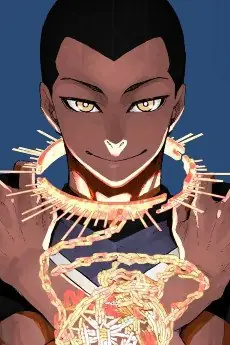
Loki is the youngest Master Striker in the sources I checked and is known for extreme speed. His pace alone threatens any defense, and the story treats him as a rising force. His youth makes him interesting, because his talent is clearly ahead of his experience.
He ranks fifteenth because speed is his main weapon, and speed alone does not reach the top of this list. He is dangerous in the open field, but I want to see him win a match through decisions rather than acceleration. If he develops his tactical side as quickly as his pace, he will climb. For now his youth is the main reason I am generous with him, since the talent is clearly there.
16. Oliver Aiku

Aiku is the captain of the U-20 team, and that role gives him a responsibility few players on the list carry. He has to hold a squad together when the talents around him want to play for themselves. That leadership matters even when he is not the most dazzling player on the pitch.
He ranks sixteenth because his value is in leadership rather than individual feats. I would rather see him decide a match with his own play than only with his voice. He represents the steady influence a national side needs, and I respect that role, but the story asks him to do little alone. A captain who keeps a squad together under pressure is still doing something important, and I give him credit for that.
17. Ikki Niko

Niko began as a centre-back and became a defensive midfielder, one of the more interesting positional changes in the series. He makes the 23-player Japan U-20 squad, which shows the coaching staff trusts his adaptability. His story is about becoming useful in a new role rather than one spectacular moment.
He ranks seventeenth because adaptability is valuable but rarely decisive on its own. His moments are about covering space and supporting others, which matters in a team sport. I would not rank him above players who can end a match with one action, so he sits in the middle of B Tier. His willingness to move into a new position is the kind of quality a national team needs, and it keeps him from falling further.
18. Shuto Sendo

Sendo is a winger who makes the Japan U-20 squad, placing him among the players the story trusts at the national level. He is a practical supporting player whose presence shows how deep the talent pool is. His role is steady rather than flashy.
He ranks eighteenth because his impact is limited compared with the players above him. He is a solid squad player, but the series gives him few moments that change how a match unfolds. He is dependable and has a clear place in the national team, but he is not likely to decide a major game. His value is being a reliable part of a deep squad, which the story shows without giving him a moment of his own.
19. Junichi Wanima

Junichi is the top scorer of Team W and one of the more interesting strikers in the early selection. He is the older twin in a pair whose connection gives the team an unusual dynamic. His scoring in his team is the clearest proof of his finishing.
He ranks nineteenth because his goals came against opposition the story does not treat as the strongest. He is eliminated for not making the top 23, which places a ceiling on how the story rates him. He deserves a B Tier place for the consistency of his finishing, and a higher rank would need goals against the best opposition. His twin’s presence is part of his story, and that connection gives his scoring a context the series uses well.
20. Wataru Kuon

Kuon is a serious defensive organizer from the early selections who is later eliminated. He is one of the sharpest tactical minds early in the story, and his exit gives his arc a clear dramatic turn. He understands how a team can be controlled from the back.
He ranks twentieth because his influence peaks early and fades. His early exit costs him the chance to become a long-term force. I think his writing is better than his impact, and the story gives him few chances to prove his tactical sense in a match that matters after that point. His early thinking is visible enough to rank him above players who never show that kind of mind.
21. Leonardo Luna

Luna is a Real Madrid player who appears in the Neo Egoist League storyline. He gets less pitch time than the others, but his presence shapes how teams see the players in the program. He is an important outside figure because his judgments carry real weight.
He ranks twenty-first because his role is evaluation rather than action. A tier list that measures feats on the pitch has to place him below the players who produce those feats. He is a clever addition to the story, and that is the main reason he sits in B Tier rather than lower. His analysis gives the outside world a voice in the program, which helps the story feel bigger than the pitch.
22. Jingo Raichi

Raichi is an aggressive, high-stamina forward who plays as a substitute in the U-20 match. His energy is his main asset, and he can wear a defense down over a full game. His direct, physical style gives the squad a different kind of threat from its more technical players.
He ranks twenty-second because his approach is effective but narrow. He is a strong option against a tired defense, but the story does not show him creating the kind of chance that decides a match alone. He would rise if the series gave him a game where his stamina and finishing became a clear turning point. His bench appearance is still a genuine impact, and he is a useful option even at this level.
23. Ryosuke Kira

Kira is a highly ranked player known as the “Crown Jewel of Japan,” a title that sets high expectations from the start. He is one of the first players eliminated, which makes his story a cautionary example of how the selection system works. Talent alone was not enough for him to survive.
He ranks twenty-third because his early reputation outweighs his time on the page. The story treats him as a major name, but his elimination limits what he can contribute afterward. I put him in B Tier for the expectations he carries and the lesson of his fall, not for skill proven in the matches that matter most. The title he carries makes his early exit feel bigger than the match that ended it.
C Tier: Supporting Players Who Still Matter
The seven players in C Tier have memorable moments or useful roles in the plot, but their skill or influence is limited. None of them are weak characters, but they sit below the players who change matches. Their rank reflects a limited role, not a poor character.
24. Zantetsu Tsurugi

Tsurugi is a fast winger with limited tactical awareness. His speed is his main weapon, and he can run past defenders when the space is open. He shows how the program rewards raw ability and punishes players who cannot read the game.
He ranks twenty-fourth because his speed has a clear ceiling. He beats players in a straight race, but the story shows him struggling once the match becomes about positioning and timing. He would need a far more developed tactical sense to move up. His pace is still a real asset in open space, which keeps him above players whose contribution is brief. That is a fair place for a winger who shows his speed but rarely his judgment.
25. Gin Gagamaru
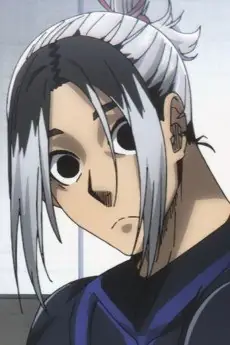
Gagamaru is a tall player who makes saves as a goalkeeper for Blue Lock XI. His height gives him a presence in goal, and his stops keep his team in matches it might otherwise lose. He is a rare goalkeeper in a series dominated by strikers.
He ranks twenty-fifth because goalkeeping is a supporting role here. His saves are a real contribution, and they keep him above players who never make a decisive stop. But his impact is narrower than the higher tiers, and the story gives him little of the spotlight the strikers receive. A goalkeeper who makes key stops is still doing necessary work, and I would not rank him below a player who never affects a match.
26. Gurimu Igarashi
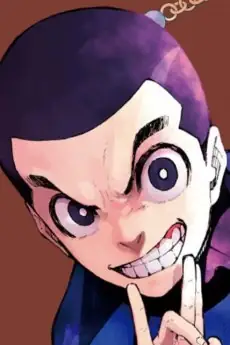
Igarashi, known as “Igaguri,” is one of the lowest-ranked players in his early group and relies on perseverance and physical play to stay in the game. He is not naturally gifted, and his story is about refusing to quit while more talented players pull ahead. He is an underdog in the most literal sense.
He ranks twenty-sixth because his method only works in some moments. His persistence is admirable, but he is eliminated for not making the top 23, which shows the limits of his approach. He would move up if the writing gave him a scoring moment that rewarded his effort. The story clearly presents that effort as the reason he stays in the program, even when it does not win him a match.
27. Yudai Imamura

Imamura is a speed-and-technique player who is eliminated in the Second Selection. He combines pace with control, and his game shows a player who knows exactly what he does well. His early appearances give him a clear identity despite his limited time in the story.
He ranks twenty-seventh because his elimination comes before he can show his full range. His skill is real and his role is memorable, but the story never gives him a match where his technique changes the result. A longer run in the program would have helped him climb. His clear style makes him a stronger C Tier player than most, and he would have fit a larger squad. His early appearances show a player still finding his place in the program.
28. Asahi Naruhaya

Naruhaya is a quick-footwork player who is eliminated in the Second Selection. His style is built on fast touches and sharp movement, which makes him hard to mark early on. He is a technical player whose talent was not enough to survive the program’s cuts.
He ranks twenty-eighth because his early promise never becomes a lasting impact. The story does not let him build a case against the stronger players in his group. His fall shows how fragile a supporting role can be, and he would need a longer run to rise above this tier. His footwork is clear enough that the story could have used him more, so his placement reflects the limited space he was given in the story.
29. Okuhito Iemon

Iemon is a forward who played as Team Z’s goalkeeper at one point, an unusual role change for a striker. He is eliminated in the Second Selection, and his time in goal shows the program’s willingness to move players around to test them. His story is small but memorable.
He ranks twenty-ninth because his role was defined by necessity rather than his own strengths. The switch to goalkeeper is memorable, but the story does not show him building a lasting identity in either position. He is a fun supporting character rather than an important one. The goalkeeping moment is one of the more unusual scenes for a striker in the whole series, and it earns him a place in this list.
30. Keisuke Wanima

Keisuke is the younger twin of Junichi Wanima and shares the early selection storyline with his brother. His story is shaped by his brother’s career and by the choice to take a second path through the program. That gives him a clear place in the series despite his limited feats.
He ranks thirtieth because his story is about opportunity more than results. The sources I checked show no match that proves his value at the top level. His character is not weak, but his impact is the most limited on the list, and the twin relationship is what gives him an identity. A higher rank would need a match where his own choices changed the result, and the series has not shown that yet.
Full Ranking at a Glance
| Rank | Character | Tier | One-line reason |
|---|---|---|---|
| 1 | Yoichi Isagi | S | Learns fastest and changes every arc he is in |
| 2 | Rin Itoshi | S | Top talent and the main early rival |
| 3 | Seishiro Nagi | S | Most natural talent, held back by lack of discipline |
| 4 | Noel Noa | S | Benchmark finisher, but with less personal growth |
| 5 | Meguru Bachira | A | Dribbling creator whose tricks open defenses |
| 6 | Hyoma Chigiri | A | Strong comeback, with impact tied to his situation |
| 7 | Rensuke Kunigami | A | Reliable teammate who builds trust in the squad |
| 8 | Michael Kaiser | A | Aggressive rival whose impact depends on the rivalry |
| 9 | Sae Itoshi | A | Status shapes others more than his own feats |
| 10 | Reo Mikage | A | Smart copy ability, more useful as a tool than a weapon |
| 11 | Shoei Baro | A | Strong finisher whose selfishness limits trust |
| 12 | Ryusei Shidou | A | Late impact as a substitute, but unpredictable |
| 13 | Jinpachi Ego | A | Architect of the program, but does not play himself |
| 14 | Alexis Ness | B | Creative midfielder whose role limits his decisions |
| 15 | Julian Loki | B | Extreme speed, with tactics still developing |
| 16 | Oliver Aiku | B | Captain whose value is in leadership |
| 17 | Ikki Niko | B | Adaptable defensive midfielder in the squad |
| 18 | Shuto Sendo | B | Dependable U-20 squad player with limited spotlight |
| 19 | Junichi Wanima | B | Real scorer, but capped by his selection |
| 20 | Wataru Kuon | B | Sharp tactical mind, cut short by an early exit |
| 21 | Leonardo Luna | B | Influential analyst who acts from outside the pitch |
| 22 | Jingo Raichi | B | High-stamina option off the bench |
| 23 | Ryosuke Kira | B | Star reputation, but eliminated early |
| 24 | Zantetsu Tsurugi | C | Fast winger with a clear tactical ceiling |
| 25 | Gin Gagamaru | C | Goalkeeper whose saves matter in a striker-led series |
| 26 | Gurimu Igarashi | C | Underdog whose persistence has limited results |
| 27 | Yudai Imamura | C | Clear technique, eliminated before a full run |
| 28 | Asahi Naruhaya | C | Quick footwork, but out in the Second Selection |
| 29 | Okuhito Iemon | C | Memorable goalkeeping switch, brief role |
| 30 | Keisuke Wanima | C | Clear identity through his twin, limited feats |
Frequently Asked Questions
Who is the strongest character in Blue Lock?
By the criteria in this list, the strongest character is Yoichi Isagi. His growth is the most consistent thing in the story, and he changes how every match he plays is judged. Rin Itoshi is the more gifted striker at the start, and Noel Noa is the more complete finisher on paper. If you want the character who matters most, it is Isagi.
Who are the best Blue Lock players?
The best players in this list are the four S Tier characters: Isagi, Rin, Seishiro Nagi, and Noel Noa. Each has a feat the story treats as decisive. Nagi is the most natural talent, but his rank drops because he rarely builds on his instincts. Noa is the benchmark finisher. These are the four I would pick first for a match that needed one decisive action.
Who are the most popular Blue Lock characters?
I do not have reliable popularity or poll data for this series, so I will not claim a ranking based on fan votes. I can say which characters sit at the center of the story. Isagi, Rin, Nagi, Bachira, and Chigiri appear in the most important rivalries and scenes in the sources I checked. Popularity is a separate question from impact, and this list ranks impact, which is the question I can answer honestly.
Are there strong female characters in Blue Lock?
The main cast of Blue Lock is almost entirely male, because the program is built around male players. The sources I checked for the main cast list no female players in the national or Blue Lock squads, so I cannot rank a female character honestly in this list. I would rather say that plainly than invent one. This is a real limit of the series, not a gap in the list.
Who is the best support character in Blue Lock?
Jinpachi Ego is the best support figure, though he is better described as a system architect than a supporting player. His program shapes every match, and his choices set the stakes. Among players who support their team on the pitch, Rensuke Kunigami and Oliver Aiku are strong choices. Kunigami builds trust with his brotherly style, and Aiku brings steady leadership to the U-20 squad.
Which Blue Lock character should new readers follow first?
New readers should follow Yoichi Isagi first, because the story is built around his development and every other character is measured against him. Once you know his arc, Rin Itoshi and Seishiro Nagi are the next logical rivals to follow. Their scenes give the early series its tension, and they show what the program expects from its best strikers. Start with Isagi and the rest of the cast falls into place.
Final Verdict
My top four are not controversial, but my reasoning is. Isagi ranks first because he is the one character who makes everyone around him better and keeps learning from every match. Rin and Nagi have more raw talent, but the story rarely tests it.
The bottom of the list is harder to defend. Several supporting players are memorable, but the story lets only a few of them change a result. My biggest disagreement with a casual ranking would be Shidou, whom I keep in A Tier mostly for one substitute appearance. If the next arcs show him deciding a major match, he will move up.