Star Trek: Prodigy season 2, is an animated television series created by Kevin Hageman and Dan Hageman in support of the streaming service Paramount+. It is the tenth Star Trek series. It was created by Dan Hageman and launched in 2021 under Alex Kurtzman’s Star Trek Universe expansion.
When will the second season be released? What’s the plot? Who will be part of the cast? Continue reading for more details.
Star Trek: Prodigy Plot and Cast
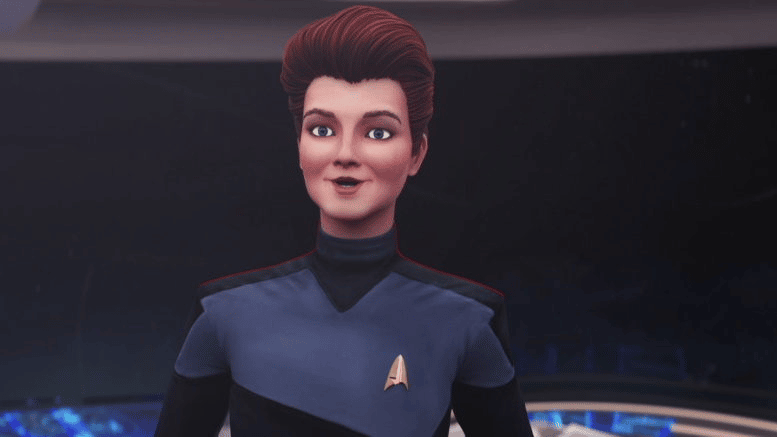
Season 1 is still being produced so we don’t know what the second season of Star Trek: Prodigy will look like. It’s safe to assume that the U.S.S. will not depart too much from the original premise of the show.
Protostar will continue its chaotic journey from the Delta Quadrant to Alpha Quadrant. It’s possible that Protostar will meet more familiar faces on their journey, as most of the famous Star Trek civilizations are located in the Alpha and Beta quadrants.
The show’s idea of going where no man has been before and then boldly working their way back means that the characters will likely meet many classic Star Trek civilizations along the way.

The cast includes Brett Gray as Dal, Ella Purnell as Gwyn, Angus Imrie playing Zero, Rylee Aalazraqui playing Rok-Tahk and Jason Mantzoukas portraying Jankom Pog. Dee Bradley Baker plays Murf. Janeway should also be played by Kate Mulgrew.
Star Trek: Prodigy release date
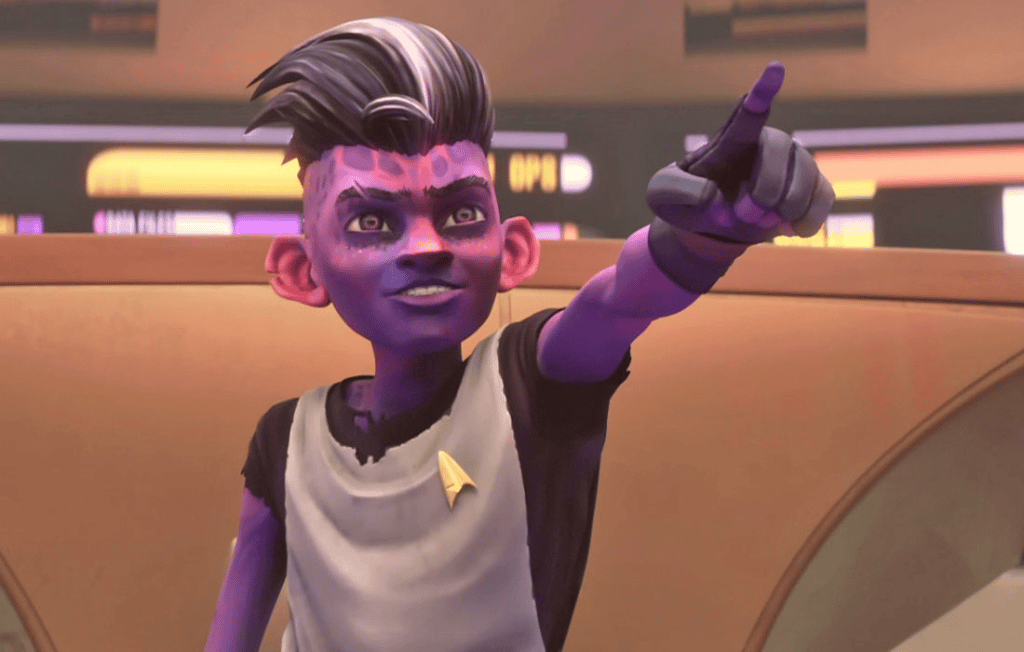
Season 1’s midseason finale airs November 18th, and the back half (ten episodes) of the season begins on January 6th 2022. The season will not end until February 2022. Season 2 is expected to air sometime in 2022. This means that it should be broadcast in late 2022-early 2023.
Official confirmation has been made by the makers that the new season will contain 20 episodes. The new season will be produced by CBS Eye Animation Productions, Nickelodeon Animation Studio, Secret Hideout Entertainment, Roddenberry Entertainment and Brothers Hageman Productions.
Star Trek: Prodigy preview
It was a long time ago, in a faraway galaxy, etc.
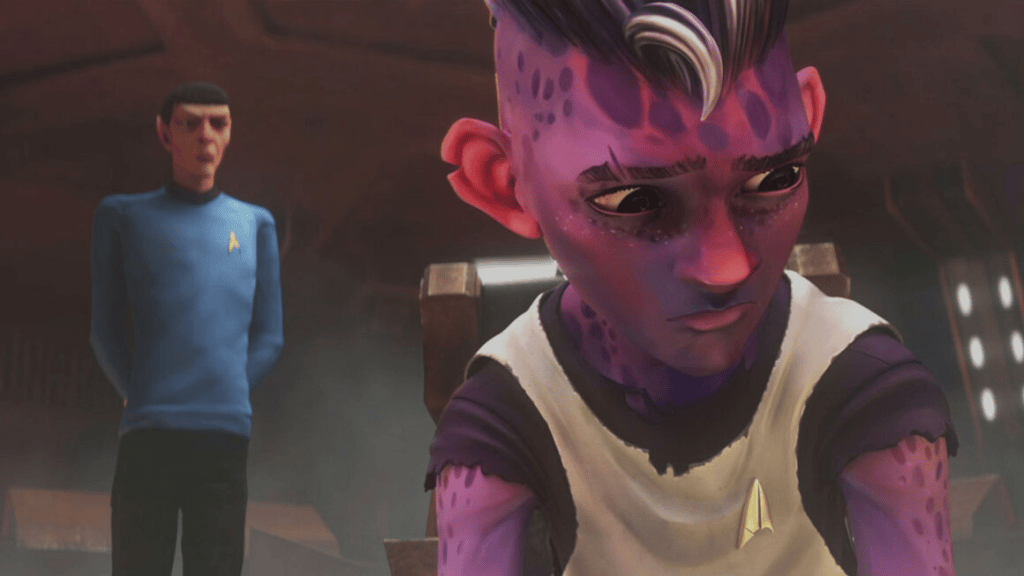
Even if one only glances at the episodes, it is possible to see that “Prodigy’s” characters are very similar to those in “Star Wars”. The Evil Emperor is The Diviner (John Noble), who has been searching the Protostar for strange, evil reasons. These are revealed in episodes nine through ten. Drednok (Jimmi Simpson), a robot enforcer who hunts down the central cast of children, is his Darth Vader. Gwyn, the Diviner’s child, is part of the central cast.
She bears a striking resemblance to Ahsoka Tano from Star Wars. A shapeshifting tendril that she extends from her arms is her signature weapon. An individual character, rather than a whole species, can have a signature weapon. This is definitely a Star Wars concept that is more important than a Trek one. Gwyn also has a smudge of destiny as The Diviner makes several cryptic comments about how she was being secretly trained to command the Protostar.
There are other comparisons to Star Wars, but they might be more tenuous. Jankom Pog’s vague resemblance to Dexter Jettster may just be a coincidence. Also, the presence of a cute, squeaky sidekick (“R2D2” in Wars, Murf “Prodigy”), and a gentle bruiser (“Chewbacca (Wars, Rok-Tahk “Prodigy”) are likely to be a coincidence. The “Prodigy” attitude toward action and chases in “Star Wars” is indicative of Trek’s gradual tonal shift towards violence and disaster in the Paramount+ era.
The Protostar’s secret

“Prodigy’s” first five episodes followed the main cast as they fled their mining colony and found the Protostar. They then escaped into space, met one another, and formed a tentative crew, all under the watchful eyes of Capt.
Janeway instructional hologram. After a brief flirtation on a living planet, which presented the crew with tempting illusions, but that secretly wanted them to drain their emotional energy; as it is with “Star Trek”, The Diviner had found them and an episode in episode five concluded with a chase from The Diviner’s Star Destroyer. The Protostar was able to escape using its unique engine.
The fourth and fifth episodes of “Prodigy” gave viewers clues that the Protostar, a small Federation starship, is hiding a mysterious power source within its drive section. Zero points out, during the chase from The Diviner that the ship isn’t just called the Protostar but also houses a protostar.
Although the process of forming a star is complex and long, it is possible to summarize it as a protostar. This is formed when enough molecular cloud, such as Bok globules have accumulated under gravitational forces to form its dense core.
It is a baby star. The U.S.S. Protostar somehow captures such a star, and taps into its energy to make a more powerful engine. Gwyn activates protostar’s engine. The ship’s drive section opens and we see the “Star Trek” version of a NOS blast taken from a “Fast & Furious”. The speed at which the Protostar zips across star charts is unprecedented.
Cutting down trekking time

Engines in Star Trek’s traditional series are powered much like internal combustion engines. However, instead of burning fuel they use matter/antimatter explosives. There have been other engine designs, such as Romulan ships that use artificial gravity to power their engines. However, Starfleet vessels operate on the same principle since inception. The protostar engine is an innovative feature in Trek.
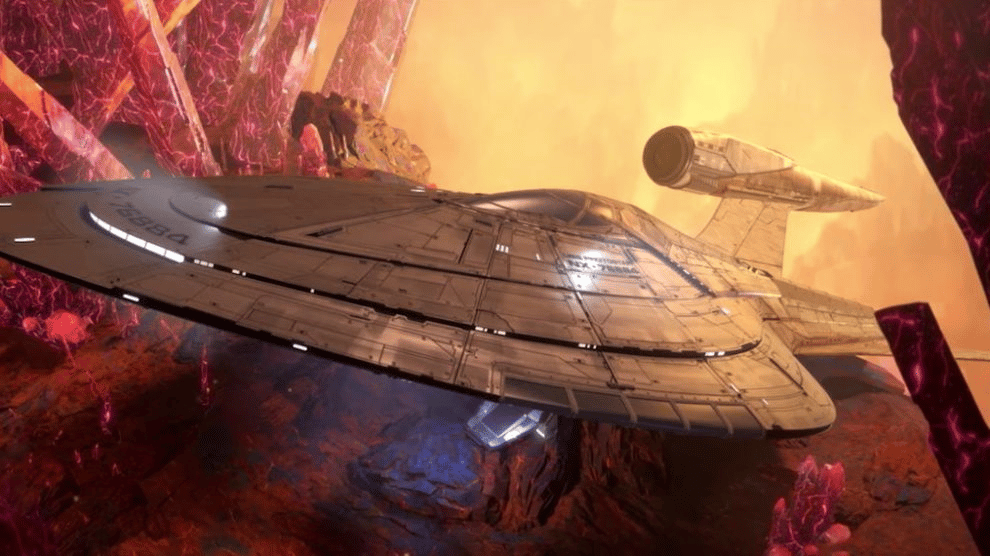
This implies that the ship is the first to be equipped with such an engine. Protostar is given an NX designation. The NX designation is given to prototype ships. Enterprise ships, for example, are NX-01. The U.S.S. Excelsior was first seen in “Star Trek III – The Search for Spock”. It was NX-20000. You can see NX-76884 in the Protostar picture. This ship is rare because it’s an original prototype. It is highly sought-after.
Paramount+’s “Star Trek” era has a new trend: the de-emphasis on trekking. The unusual engine that powers the ship allows it to teleport around the galaxy. This is one of the key concepts of “Star Trek: Discovery”. This technology would be a major coup for the galaxy. The show must explain why it’s not immediately made available or address the larger implications of eliminating all travel from the universe.
“Picard” is more concerned with androids and long-winded mysteries than it is about exploration or trekking. “Prodigy,” now has an engine that can go farther than any ship before it (that would explain its location in a distant part of the galaxy not cognizant of Federation). It likely flew off during a trial run, and landed in an area beyond detection.
It happens when it happens

The crew of the Protostar has the ability to explore the world with such an engine, yes. But now it seems that the writers of the show are trying to reach their destinations quicker than they did in “Star Wars.” Luke Skywalker, a pilot of a light battle craft, takes it to the faraway planet in “The Empire Strikes Back.”
Is his ship capable of traveling faster than light? Small craft with small engines. What was the length of his trip? Hours? Days? One month? These questions are not explored in Star Wars, as the technology of the craft is more important than getting to the next destination. “Trek,” on the other hand, has always been more concerned with the technical aspects of its starships. The Protostar is now capable of doing what Luke Skywalker’s craft can. It doesn’t matter how far it is from you, just get there.
Space is huge, as you’ll see, and Trek acknowledges that even their fictional engines are limited when faced with the vastness of space. Trek is trying to reverse this vastness with the Protostar. It is easier to navigate the galaxy now that it is smaller. You don’t need to trek to get to your destination.
Medusans and insanity
After several trials related to “Star Trek”, the main characters are encouraged by Starfleet to don Starfleet uniforms. They will then devise a complex plan to confront the Diviner, free the people he has enslaved. This episode is divided into two parts called “A Moral Star”. The Diviner will release the children in return for the ship.
This plan will reveal two key pieces of information. They will learn why the Diviner wants to get the Protostar and when the “Prodigy” takes place.
Gwyn finally confronts her father after she gives him the Protostar and cleverly removes its engine. He tells her that he actually came from the future, where his species was destroyed by a civil war. We learn that First Contact with Federation sparked the civil war. Not everyone on his planet wanted peace.
He planned to travel back in time to find a powerful ship and destroy the Federation before it could reach his homeworld. After some actions, The Diviner is confronted and Zero shows him their true form. Trek canon states that a Medusan’s true form is capable of inducing madness. They are too complex for the average humanoid mind.
Gwyn was unable to see Zero in Dal’s eyeball reflection, and her mind was damaged when they revealed themselves to the Diviner. Gwyne will need to be seen by counselors and spend some time in the hospital for the remainder of season 1.
We now know when
Although it would be nice to keep the timeline of “Prodigy” vague, it could have been thousands of years in the distant future! The show eventually establishes a clear chronology. Previously, it was established that an older Chakotay (Robert Beltran), from “Star Trek: Voyager”, was the captain of the Protostar and that he was the one who witnessed the events that left the ship stranded at a distant galaxy. It’s all fine and dandy, but there is no time frame.
In a dramatic reveal Janeway, the real Janeway, is seen answering a distress call. Adm. Janeway, who has been searching for the Protostar ever since it disappeared, has not been there for more than a decade, despite her age on “Prodigy”. This places “Prodigy”, concurrently with “Star Trek: Lower Decks” and before the events of “Star Trek: Picard”.
It may seem unlikely that any characters from “Prodigy”, or any other “Star Trek” show, will interact with each other, but it is possible, given the show’s nature.
It seems more fitting that the show’s focus is on young people who learn to be better officers by themselves, so it would be appropriate for them to remain isolated.