The best gender bender manga blend sharp character writing with transformative premises, led by timeless classics like Ranma ½, Ōoku: The Inner Chambers, and Wandering Son alongside modern hits such as Onimai: I’m Now Your Sister! and Boys Run the Riot. Whether a series uses magical curses, body swaps, reincarnation, or disguise, the strongest entries treat gender shifts as a lens for comedy, romance, or deep personal growth rather than a one-note gimmick.
From slapstick martial arts rom-coms of the 1980s to grounded psychological dramas and absurd isekai parodies, the genre spans every major manga demographic—shōnen, shōjo, seinen, and josei. Below is a ranked breakdown of 25 essential titles you can read today.
How We Ranked These Gender Bender Manga
To build a balanced ranking that respects both genre history and modern storytelling, every series on this list was evaluated across four core criteria:
- Narrative Impact: How effectively the gender transformation, body swap, or disguise drives the plot and character arcs rather than serving as pure fanservice.
- Character Depth: Whether the protagonists feel like fully realized people whose relationships and inner lives evolve meaningfully because of their circumstances.
- Cultural Influence: The lasting mark a series left on manga, anime, and subsequent creators working in the gender-bender space.
- Consistency and Pacing: How well the manga maintains its quality from its opening chapters through its conclusion or latest serialization.
Iconic Classics That Defined the Genre
These five landmark series established the tropes, emotional range, and commercial appeal that still shape gender bender manga storytelling decades later.
1. Ranma ½
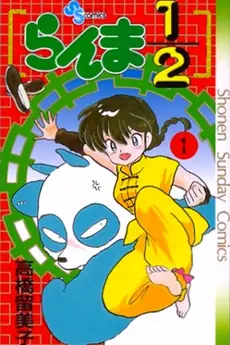
Written and illustrated by Rumiko Takahashi, Ranma ½ ran in Shogakukan’s Weekly Shōnen Sunday from August 1987 to March 1996 across 38 volumes (published in English by Viz Media). The story follows teenage martial artist Ranma Saotome, who falls into the cursed Spring of a Drowned Girl during a training journey with his father Genma at Jusenkyo in China’s Qinghai Province. Whenever Ranma is splashed with cold water, he transforms into a girl, returning to his male body upon contact with hot water. His arranged engagement to fellow martial artist Akane Tendo sets off years of chaotic rivalries at Furinkan High School and the Tendo Dojo, involving eccentric fiancées and cursed rivals like Ryoga Hibiki (who becomes a piglet) and Mousse (who becomes a duck).
Ranma ½ sits at number one with over 55 million copies in circulation, making it one of the best-selling manga series of all time and among the first manga and anime titles to gain popularity in the United States. Rather than treating the curse as a passive gag, Ranma frequently transforms into a girl willfully to advance his goals, and the series’ enduring appeal spans Studio Deen’s 1989–1992 anime, 12 OVAs, three films, a 2011 live-action special, and MAPPA’s 2024 anime adaptation on Nippon TV and Netflix.
2. Ōoku: The Inner Chambers
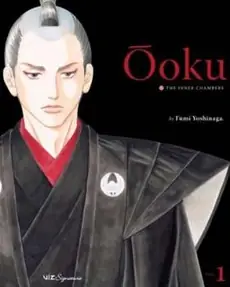
Fumi Yoshinaga’s alternate-history masterpiece Ōoku: The Inner Chambers was serialized in Hakusensha’s Melody from June 2004 to December 2020 and spans 19 volumes (licensed in North America by Viz Media). Set during an alternate Edo period, a mysterious plague known as the redface pox—affecting only young boys with an 80% fatality rate—decimates Japan’s male population, reducing men to roughly one-quarter of the female population. Women replace men as the main labor force, pass family businesses from woman to woman, and assume the Shōgunate after the third Shogun, Tokugawa Iemitsu, while the Ōoku of Edo Castle becomes a lavish world of “three thousand beautiful men” serving the female Shōgun.
Beginning with the eighth Shogun, Yoshimune, investigating the Chronicle of the Dying Day logbooks, Yoshinaga flips an entire society’s gender hierarchy to examine power, duty, and human vulnerability. With over 6 million copies in circulation by December 2020, winner of the 13th Tezuka Osamu Cultural Prize Grand Prize (2009), the 56th Shogakukan Manga Award (2011), and an Excellence Prize at the 10th Japan Media Arts Festival, it was also adapted into two live-action films (2010 and 2012), TV dramas (2012 and 2023), and a 2023 Studio Deen anime on Netflix.
3. Wandering Son
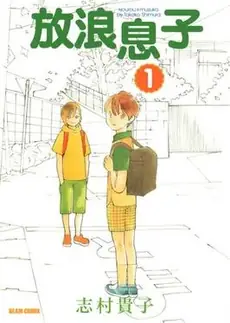
Serialized in Enterbrain’s Comic Beam from December 2002 to August 2013 across 15 volumes (licensed in English by Fantagraphics Books), Takako Shimura’s Wandering Son (Hōrō Musuko) takes a quiet, empathetic look at gender identity during adolescence. The story centers on a young trans girl, Shuichi Nitori, and her close friend Yoshino Takatsuki, who initially confesses a desire to be a boy. Beginning in fifth grade and continuing through junior high and high school alongside friends such as Saori Chiba, Makoto Ariga, and adult trans woman Yuki, they navigate oncoming puberty—including Shuichi’s changing voice—gender dysphoria, and social pressures.
Shimura originally planned a story about a high school girl wanting to be a boy before shifting the focus to the worries of young characters before puberty. Selected as a recommended work by the 10th Japan Media Arts Festival jury in 2006 and adapted into a 12-episode anime by AIC Classic directed by Ei Aoki in 2011 (with 11 episodes broadcast on Fuji TV’s Noitamina), Wandering Son earns its top-three placement for treating its characters’ confusion, friendships, and family tensions with patience and honesty.
4. Ouran High School Host Club
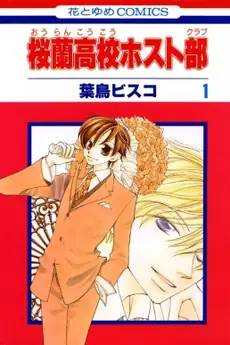
Bisco Hatori’s Ouran High School Host Club ran in Hakusensha’s LaLa from September 2002 to November 2010 for 18 volumes (published in English by Viz Media). Scholarship student Haruhi Fujioka stumbles into the Third Music Room at the elite Ouran Academy in Tokyo and accidentally shatters an antique Renaissance-style vase valued at 8 million yen. Unable to pay the debt, Haruhi is forced to work as the Host Club’s errand boy, and because of her short hair, slouching attire, and gender-ambiguous face, the six male hosts initially mistake her for a boy before discovering she is a natural at hosting and promoting her to a full club member.
Although Haruhi’s male presentation is a practical circumstance rather than a supernatural shift, her indifference to traditional gender roles drives both the comedy and romance of the series. With over 14 million copies in circulation by January 2026, the manga inspired a 26-episode 2006 anime by Bones, a 2011 live-action television drama, a 2012 live-action film, and three Japanese stage musicals from 2022 to 2023.
5. Hana-Kimi
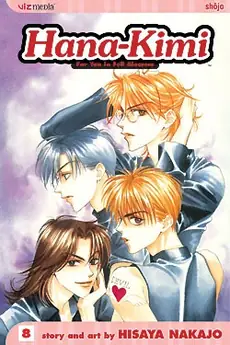
Written and illustrated by Hisaya Nakajo, Hana-Kimi (Hanazakari no Kimitachi e) was serialized in Hakusensha’s Hana to Yume from September 1996 to August 2004 and collected into 23 volumes (released in English by Viz Media). Inspired by high jumper Izumi Sano after seeing him compete on television, Mizuki Ashiya—a Japanese girl living in the United States—convinces her parents to let her transfer to Japan and enroll at Osaka Gakuen (Osaka High School) to encourage Sano after he stops jumping. Because Osaka Gakuen is an all-boys boarding school, Mizuki cuts her hair, disguises herself as a boy, and ends up as Sano’s roommate, though an early accident exposes her secret to both Sano and school doctor Hokuto Umeda.
Hana-Kimi became a major commercial hit, inspiring live-action television dramas in Taiwan (2006), Japan (2007, 2011, and 2026), and South Korea (2012’s To the Beautiful You), as well as a 25-episode anime adaptation by Signal.MD in 2026. Its mix of dormitory rivalries, comedic misunderstandings with classmates like Shūichi Nakatsu, and slow-burn romance set the template for all-boys-school disguise stories.
Psychological Dramas and Emotional Body-Swaps
Not every gender bender manga aims for laughs. These five titles use body swaps, shared dreams, and identity shifts to explore isolation, emotional connection, trauma, or self-acceptance.
6. Inside Mari
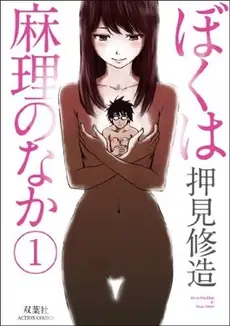
Shūzō Oshimi’s psychological mystery Inside Mari (Boku wa Mari no Naka) ran in Futabasha’s Manga Action from March 2012 to September 2016 for 9 volumes (published in English digitally by Crunchyroll and in print by Denpa). Reclusive college dropout Isao Komori has one daily routine: watching high school girl Mari Yoshizaki at a local convenience store. One morning, Isao wakes up inside Mari’s body—only to discover that his college self still exists. As he navigates Mari’s school life and bonds with fellow student Yori Kakiguchi, who is in love with Mari, they uncover that the real reason behind the swap is completely different from what they imagined.
Described as an existential deconstruction of the body-swap and yuri genres, Oshimi—also the creator of The Flowers of Evil—turns a familiar setup into an unsettling investigation of mental health and fractured identity. The manga was also adapted into an eight-episode 2017 Fuji TV live-action television drama starring Elaiza Ikeda and Ryo Yoshizawa.
7. Shishunki Bitter Change
Created by Masayoshi, Shishunki Bitter Change was serialized in Flex Comix’s web manga magazine Comic Polaris from October 2012 to January 2019 across 9 volumes. In fourth grade, thrill-seeking boy Yuuta Kimura falls from a tree and lands on lone, “goody-two-shoes” classmate Yui Ootsuka, inexplicably swapping their bodies. With no known way to change back, years pass and the two are forced to grow up through middle school and high school in each other’s lives, with Yuuta’s best friend Kazuma Takaoka serving as the sole person fully aware of their secret until high school classmate Erina Koizumi later discovers they switched.
What sets Shishunki Bitter Change apart is its commitment to the long-term realities of adolescence in someone else’s body, from shifting friendships and family members like Yuuta’s little brother Haruki to romantic complications in middle and high school. Its grounded emotional weight earned it 15th place in the print manga category of the first Next Manga Award.
8. After School Nightmare

Setona Mizushiro’s After School Nightmare (Hōkago Hokenshitsu) was serialized in Akita Shoten’s Princess from June 2004 to November 2007 and collected into 10 volumes (licensed in North America by Go! Comi). The story follows Mashiro Ichijo, an intersex high school student raised as a boy—physically and genetically male in the upper body and female in the lower half—who identifies as a man while privately doubting himself. When a mysterious school nurse introduces him to a special class, Mashiro and his classmates must enter a collective dream world after school to find a graduation key, knowing that whoever finds it graduates and is forgotten by everyone else.
Inside the dream world, Mashiro manifests two connected feather-shaped swords representing his male and female sides while caught in a painful love triangle with classmate Kureha Fujishima and Sou Mizuhashi. Nominated for a 2007 Eisner Award for Best U.S. Edition of International Material—Japan, After School Nightmare uses surreal horror imagery and psychological allegory to confront trauma and gender anxiety with rare empathy.
9. Your Name
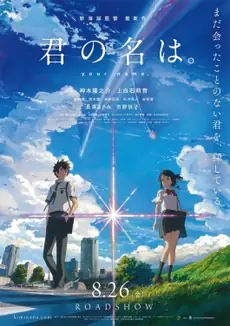
Adapted by Ranmaru Kotone from Makoto Shinkai’s 2016 blockbuster animated film, the Your Name (Kimi no Na wa.) manga ran in Media Factory’s Monthly Comic Alive from May 2016 to January 2017 across 3 volumes (9 chapters). High school girl Mitsuha Miyamizu, bored with rural life in Itomori, Gifu, and Tokyo high schooler Taki Tachibana from Shinjuku begin intermittently waking up in each other’s bodies, setting ground rules and communicating via notes on paper, their phones, and their skin. When the swaps abruptly stop, Taki travels to Hida to search for Mitsuha, only to learn that Itomori was decimated three years earlier in 2013 by fragments of Comet 279P/Tiamat—sparking a desperate race to evacuate the town.
Even in a compact three-volume run, Kotone’s adaptation captures the urgency, time-crossed mystery, and emotional payoff of Shinkai’s record-breaking film. It remains one of the most accessible entry points into body-swap romance for new readers.
10. Boys Run the Riot
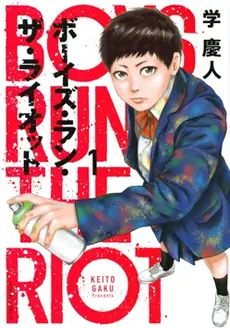
Written and illustrated by Keito Gaku, Boys Run the Riot began serialization in Kodansha’s Weekly Young Magazine in January 2020 before moving to Comic Days from September to October 2020, concluding at 4 volumes and 37 chapters. The series follows Ryo Watari, a transgender high school boy dealing with gender dysphoria and isolation at a school that does not accept his gender, who teams up with cisgender transfer student Jin Sato and classmate Itsuka to launch an independent streetwear brand called “Boys Run the Riot.”
Created by a transgender mangaka and localized into English by an all-transgender team hired by Kodansha USA, the series brings lived-in authenticity to Ryo’s daily hurdles, from chest binding and being forced to wear a girls’ uniform to finding creative freedom. Its 2021 Harvey Award nomination for Best Manga, School Library Journal top-10 manga honor, and 2022 YALSA Great Graphic Novels for Teens Top Ten selection reflect its landmark impact on modern manga.
Comedy, Romance, and School-Life Chaos
For readers who want lighthearted misunderstandings, eccentric casts, and comedic or romantic tension, these eight series deliver standout humorous takes on the genre.
11. Yamada-kun and the Seven Witches

Miki Yoshikawa’s Yamada-kun and the Seven Witches ran in Kodansha’s Weekly Shōnen Magazine from February 2012 to February 2017 for 28 volumes and 243 chapters (distributed digitally by Crunchyroll and published in English by Kodansha USA). Apathetic delinquent Ryu Yamada accidentally tumbles down a flight of stairs and kisses top honor student Urara Shiraishi, triggering a body swap. Alongside Toranosuke Miyamura, they revive Suzaku High School’s dormant Supernatural Studies Club and discover seven witches whose powers—ranging from telepathy to mind control—activate through a kiss, while Yamada possesses the ability to copy any witch’s power.
Yoshikawa turns the body-swap mechanic into an inventive puzzle-solving tool for the Supernatural Studies Club across multiple arcs of witch-hunting and memory manipulation. Its brisk pacing and likable cast also inspired an eight-episode 2013 live-action television drama and a 12-episode 2015 anime series by Liden Films.
12. Cheeky Angel

Hiroyuki Nishimori’s Cheeky Angel (Tenshi na Konamaiki) was serialized in Shogakukan’s Weekly Shōnen Sunday from June 1999 to August 2003 across 20 volumes (published in English by Viz Media). Megumi Amatsuka is a tough, beautiful 15-year-old tomboy who constantly gets into street fights, hiding the secret that she used to be a boy until age nine, when he rescued a strange old man from thugs and received a magical book containing a trickster genie named Pierrot. When Megumi wished to become the “manliest man on Earth,” the genie twisted the wish by transforming him into a girl and rewriting everyone’s memories—except best friend Miki’s—to remember Megumi as always having been female.
Winner of the 46th Shogakukan Manga Award in the shōnen category in 2001 and adapted into a 50-episode anime by TMS Entertainment (2002–2003), Cheeky Angel thrives on Megumi’s fierce, unapologetic personality and chaotic high school friendships. Nishimori balances absurd delinquent brawls and unwanted admirers like Genzō Soga with genuine warmth.
13. Boku Girl
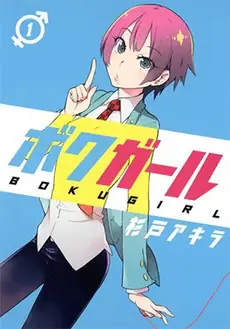
Akira Sugito’s Boku Girl ran in Shueisha’s Weekly Young Jump from December 2013 to May 2016 and spans 11 volumes (plus a 2015 spin-off light novel, Boku Girl: Boku no Arbeit). High school freshman Mizuki Suzushiro already struggles with being mistaken for a girl and receiving confessions from boys due to his feminine features when the bored Norse trickster god Loki targets him with a magical prank. Stung by a strange bee, Mizuki wakes up transformed into a biological female and must navigate daily school life and a tangled love triangle alongside loyal childhood friend Takeru Ichimonji and his crush Yumeko Fujiwara.
Beneath its ecchi comedy, Boku Girl spends real time exploring Mizuki’s shifting feelings about identity, attraction, and acceptance. Sugito’s expressive artwork and the central dynamic between Mizuki, Takeru, and Yumeko elevate the story above standard fanservice fare.
14. Onimai: I’m Now Your Sister!
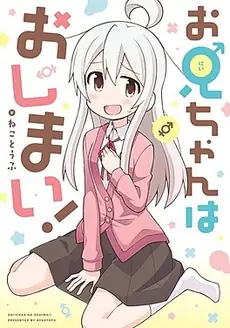
Created by Nekotofu, Onimai: I’m Now Your Sister! (Onii-chan wa Oshimai!) began online via Pixiv and Niconico Seiga in 2017 before also launching serialization in Ichijinsha’s Monthly Comic Rex in April 2019, reaching 11 volumes as of May 2026 (published digitally in English by Kodansha USA). Mahiro Oyama, a shut-in otaku and NEET fond of video games, wakes up one morning transformed into a young girl after his genius scientist younger sister Mihari—a university student who skipped several grades—slips him an experimental drug developed with advisor Chitose Azuma. Transferring into middle school, Mahiro slowly rebuilds social skills and forms friendships with classmates Momiji Hozuki, Asahi Ōka, Miyo Murosaki, and Nayuta Tenkawa.
Inspired by Nekotofu’s love of Ranma ½, Kashimashi: Girl Meets Girl, and Your Name, Onimai succeeds by framing Mahiro’s transformation as a second chance at personal growth rather than pure slapstick. Its 12-episode 2023 anime adaptation by Studio Bind aired to strong ratings and brought wide attention to the manga’s cozy slice-of-life charm.
15. Kashimashi: Girl Meets Girl
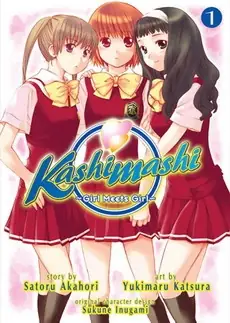
Written by Satoru Akahori and illustrated by Yukimaru Katsura, Kashimashi: Girl Meets Girl ran in MediaWorks’ Dengeki Daioh from July 2004 to May 2007 for 5 volumes (licensed in North America by Seven Seas Entertainment). After being rejected by classmate Yasuna Kamiizumi, effeminate high school boy Hazumu Osaragi climbs Mt. Kashima and is accidentally killed by a crash-landing alien spacecraft. To rectify the mistake, the alien Hitoshi Sora brings Hazumu back to life, rebuilding her body as a biological female down to the DNA level—prompting Yasuna (who has an affliction where she sees males as a gray blur) to confess her love and sparking a love triangle with athletic childhood friend Tomari Kurusu.
Kashimashi is a foundational yuri and gender bender title that treats Hazumu’s emotional transition with surprising tenderness, becoming Seven Seas Entertainment’s best-selling title in July 2007. Its concise five-volume run—alongside a 12-episode 2006 anime and OVA by Studio Hibari—makes it an easy, rewarding read.
16. Prunus Girl
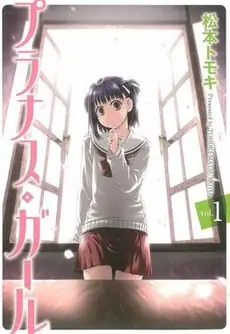
Following two pilot chapters in 2008 and 2009, Tomoki Matsumoto’s Prunus Girl was serialized in Square Enix’s Gangan Joker from April 2009 to April 2013 across 6 volumes. High-performing student Makito Maki meets a charming, seemingly female peer while checking his high school entrance exam results, only for that student, Kizuna Aikawa, to reveal on the first day of school that he is actually a cross-dressing boy. Aikawa continues presenting femininely and teasing Maki, keeping his true feelings playful and ambiguous throughout their high school days.
Prunus Girl stands out among cross-dressing school comedies for its sharp comedic banter and genuinely sweet romantic payoff. Maki’s growing confusion over his attraction paired with Aikawa’s effortless confidence creates an engaging central dynamic.
17. Pretty Face
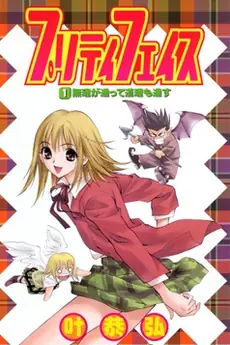
Yasuhiro Kano’s Pretty Face ran in Shueisha’s Weekly Shōnen Jump from May 2002 to June 2003 for 6 volumes (licensed in North America by Viz Media). High school student and arrogant karate expert Masashi Rando is burned beyond recognition in a tragic school bus accident while returning from a tournament in Hokkaidō and wakes up from a one-year coma to find his face reconstructed by the talented yet slightly deranged Dr. Jun Manabe. Having found only a photo of Masashi’s crush, Rina Kurimi, in his pocket, Manabe gave Masashi her face; after discovering his parents moved away and his house was demolished when he was mistakenly pronounced dead, Masashi runs into Rina, who mistakes him for her runaway identical twin sister Yuna Kurimi, leading him to feign amnesia and pose as Yuna to spare Rina pain until he can find her real sister.
Though short-lived in Jump, Pretty Face delivers fast-paced farce and committed physical comedy—especially as Masashi retains his superhuman strength in a smaller body and sports blond hair that differs from Rina’s black hair. Masashi’s struggle to act like a typical teenage girl while worrying he might grow too accustomed to being Yuna keeps the six-volume run entertaining.
18. Stop!! Hibari-kun!
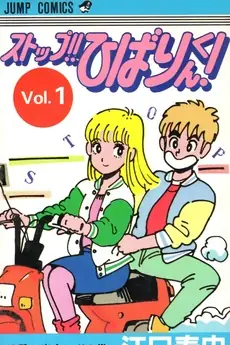
Hisashi Eguchi’s Stop!! Hibari-kun! was serialized in Shueisha’s Weekly Shōnen Jump from October 1981 to November 1983 across 4 volumes (later collected in a 2009–2010 three-volume Complete Edition by Shogakukan and licensed in English by Peow2) and adapted into a 35-episode anime by Toei Animation from May 1983 to January 1984. After his mother’s death, high schooler Kōsaku Sakamoto moves to Tokyo to live with her friend, yakuza boss Ibari Ōzora, and his four children—Tsugumi, Tsubame, Hibari, and Suzume. Although Kōsaku is immediately drawn to Hibari, who looks and lives as a girl and openly flirts with him, he is shocked to learn that Hibari was assigned male at birth and is Ibari’s only son.
Praised for its light, pop visual style and the delicate, attractive touch Eguchi brought to drawing Hibari, Stop!! Hibari-kun! is also cited as having helped pave the way for the J-pop aesthetic. Even though Eguchi abandoned the serialization after his request for a biweekly schedule was refused, the series remains a trailblazer in 1980s shōnen comedy.
Isekai, Supernatural Twists, and Genre Standouts
From goddess-cursed office workers and battle-obsessed knights to cross-dressing fashionistas and rain-triggered transformations, these seven series showcase fantasy, supernatural, and slice-of-life variations on the formula.
19. Life with an Ordinary Guy Who Reincarnated into a Total Fantasy Knockout
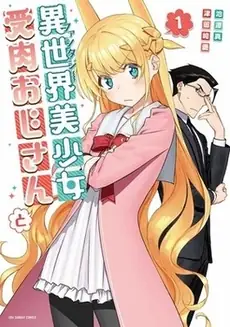
Written by Yū Tsurusaki and illustrated by Shin Ikezawa, Life with an Ordinary Guy Who Reincarnated into a Total Fantasy Knockout (Fabiniku) has been serialized on Cygames’ Cycomi since November 2019, with 19 volumes published by Shogakukan as of November 2026 (set to conclude with volume 20, and licensed in North America by Seven Seas Entertainment). Two 32-year-old office workers and childhood friends, Hinata Tachibana and Tsukasa Jinguji, are summoned to a fantasy world by the Goddess of Love and Beauty and charged with defeating the demon lord. Because Tachibana drunkenly wished to be a girl, he is transformed into a stunning blonde beauty with supernatural allure that entices men—while Jinguji gains superhuman strength—forcing both friends to fight off growing feelings for each other.
Fabiniku is one of the sharpest isekai parodies on the market because it anchors its absurd premise in a genuine childhood friendship. Watching two exhausted thirty-somethings bicker over fantasy tropes while dodging romantic tension—also adapted into a 12-episode 2022 anime by OLM—is consistently hilarious.
20. Reborn to Master the Blade: From Hero-King to Extraordinary Squire
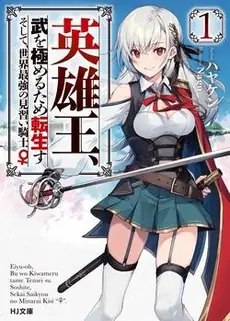
Based on Hayaken’s light novels and illustrated by Moto Kuromura, the manga adaptation of Reborn to Master the Blade has been serialized on Hobby Japan’s Comic Fire since December 2019 across 6 volumes (licensed digitally by J-Novel Club and in print by Yen Press). On his deathbed, the legendary Hero-King Inglis of the Kingdom of Silvare wishes to live his next life purely to master martial arts. The goddess Alistia grants his wish, reincarnating him far in the future as a girl of a knightly family named Inglis “Chris” Eucus, who wields ancient Aether magic despite being Runeless and trains at the Knight Academy alongside her cousin Rafinha “Rani” Bilford, Leone Olfa, and Liselotte Arcia.
Unlike many gender-bent reincarnation protagonists, Chris wastes zero time angsting over her new body, balancing her fondness for desserts and fancy clothes with a huge appetite and an unquenchable eagerness to beg strong fighters like Ripple for duels. Adapted into a 12-episode 2023 anime by Studio Comet, the series shines through its joyful protagonist and crisp action.
21. Kämpfer

Adapted from Toshihiko Tsukiji’s light novels by Yu Tachibana, the Kämpfer manga ran in Media Factory’s Monthly Comic Alive from April 2008 to August 2013 for 10 volumes. Second-year Seitetsu High School student Natsuru Senō—who has a crush on school beauty Kaede Sakura—wakes up transformed into a girl and learns from a talking stuffed tiger named Harakiri Tora that he has been chosen as a Kämpfer, a female fighter bound by a colored Bracelet of Oath. Initially placed on the Blue faction and wielding Zauber magic such as fireballs, Natsuru must battle rival Red Kämpfer while enrolling as both a male and female student of the same name at school alongside fellow fighters Akane Mishima, Shizuku Sangō, and Mikoto Kondō.
Kämpfer leans unapologetically into late-2000s harem comedy and over-the-top battles, complemented by Nomad’s 12-episode 2009 anime and the two-episode 2011 sequel Kämpfer für die Liebe. Its chaotic school-life misunderstandings and shifting Red, Blue, and White faction alliances make it a nostalgic favorite of that era.
22. Magical Girl Ore
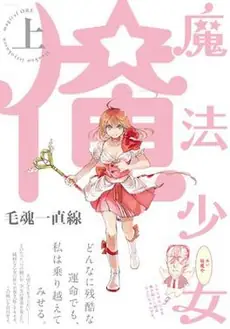
Icchokusen Mōkon’s Magical Girl Ore (Mahō Shōjo Ore) was serialized in Fusion Product’s Comic Be from 2012 to 2014 for 2 volumes, later receiving a 2018 manga sequel alongside a 12-episode anime by Pierrot+. Unpopular pop idol Saki Uno, one half of the duo “Magical Twin” with best friend Sakuyo Mikage, discovers that her mother Sayori used to be a magical girl before back problems forced her to pass the role down. Guided by the yakuza-like mascot Kokoro-chan to protect her crush Mohiro Mikage from cute-faced demons, Saki transforms into “Magical Girl Ore”—a large, heavily built, muscular man wearing a cute girlish magical uniform—only for Mohiro to become attracted to her male form while Sakuyo transforms too to protect Saki.
Magical Girl Ore subverts classic magical girl tropes with pure, unfiltered absurdity. Seeing a hulking man pummel demons while worrying about idol rehearsals—and navigating a love triangle across transformed identities—is comedy gold.
23. Princess Jellyfish
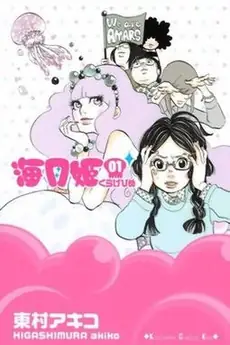
Akiko Higashimura’s Princess Jellyfish (Kuragehime) ran in Kodansha’s Kiss from October 2008 to August 2017 across 17 volumes (published in English by Kodansha USA). Shy 18-to-19-year-old aspiring illustrator Tsukimi Kurashita loves jellyfish and lives in Amamizukan, a men-prohibited Tokyo apartment building filled with female otaku known as the “Sisterhood.” Her quiet life is upended when she meets Kuranosuke Koibuchi, the stylish, illegitimate son of a politician who cross-dresses under the alias “Kurako” to escape political obligations, feel closer to his mother’s wardrobe, and pursue fashion—eventually joining forces with Tsukimi and her housemates to save Amamizukan from redevelopment.
Winner of the 34th Kodansha Manga Award for Best Shōjo Manga in 2010 and adapted into an 11-episode 2010 anime by Brain’s Base, a 2014 live-action film, and a 2018 TV drama, Princess Jellyfish uses Kuranosuke’s cross-dressing to bridge two completely different worlds. Higashimura’s humor and heartfelt support for misfits make it a modern josei classic.
24. Kokoro Connect
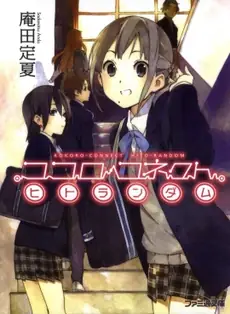
Based on Sadanatsu Anda’s 11-volume light novel series, Kokoro Connect received a five-volume manga adaptation illustrated by CUTEG in Enterbrain’s Famitsu Comic Clear (October 2010 to August 2013, published in English by Seven Seas Entertainment) as well as the one-volume Kokoro Connect On Air by Na! in Kadokawa Shoten’s Nyantype (2012–2013), alongside Silver Link’s 17-episode 2012 anime and OVA run. The story follows the five members of Yamahoshi Academy’s Student Cultural Research Club—Taichi Yaegashi, Iori Nagase, Himeko Inaba, Yoshifumi Aoki, and Yui Kiriyama—whose lives are upended by a mysterious entity called Heartseed that subjects them to random body swaps, unleashed desires, telepathic thought broadcasting, and age regression.
While body-swapping is only the first of Heartseed’s psychological trials, it immediately strips away the club members’ polite facades. The fallout forces the five friends to confront buried insecurities, unspoken crushes, and past traumas to rebuild genuine trust.
25. Ame Nochi Hare
Written and illustrated by Bikke, Ame Nochi Hare (also known as Clear Up After Rain) was serialized in Enterbrain’s Comic B’s-LOG and its successor publications from June 2008 to December 2014 across 8 volumes. At the prestigious all-boys Amagai Academy, five first-year students—Hazuki Yamanoi, Touma Kisaragi, Madoka Sakonji, Junta Goromaru, and Yuusuke Maki—are struck by lightning during an unusual spring storm at their entrance ceremony. From that day forward, whenever it rains, all five boys transform into girls until the weather clears.
Assisted by enigmatic dormitory supervisor Haruto, Ame Nochi Hare rounds out the list with a charming ensemble dynamic and a clever weather-based trigger. Watching five very different classmates navigate school life, identity dilemmas, and budding romances amid sudden rainy-day transformations gives the series a light, breezy appeal.
Summary Table: Top 25 Gender Bender Manga
| Rank | Title | Creator(s) | Why It Sits Here |
|---|---|---|---|
| 1 | Ranma ½ | Rumiko Takahashi | Defined mainstream gender-bender comedy with iconic martial arts chaos. |
| 2 | Ōoku: The Inner Chambers | Fumi Yoshinaga | Masterpiece alternate history flipping Edo-period gender power dynamics. |
| 3 | Wandering Son | Takako Shimura | Honest, deeply empathetic coming-of-age drama about gender identity. |
| 4 | Ouran High School Host Club | Bisco Hatori | Sharp shōjo parody anchored by Haruhi’s indifference to gender roles. |
| 5 | Hana-Kimi | Hisaya Nakajo | Gold-standard all-boys-school disguise romance with huge cultural reach. |
| 6 | Inside Mari | Shūzō Oshimi | Tense psychological mystery that turns a body swap into an identity thriller. |
| 7 | Shishunki Bitter Change | Masayoshi | Grounded, bittersweet look at growing up trapped in someone else’s body. |
| 8 | After School Nightmare | Setona Mizushiro | Eisner-nominated surreal drama tackling trauma and gender anxiety. |
| 9 | Your Name | Makoto Shinkai, Ranmaru Kotone | Compact, emotionally resonant adaptation of a modern body-swap classic. |
| 10 | Boys Run the Riot | Keito Gaku | Authentic transmasculine story centered on friendship and streetwear. |
| 11 | Yamada-kun and the Seven Witches | Miki Yoshikawa | Inventive school comedy using kiss-triggered body swaps as a mystery tool. |
| 12 | Cheeky Angel | Hiroyuki Nishimori | Award-winning delinquent comedy led by a fierce transformed tomboy. |
| 13 | Boku Girl | Akira Sugito | Expressive rom-com balancing ecchi humor with genuine self-discovery. |
| 14 | Onimai: I’m Now Your Sister! | Nekotofu | Cozy slice-of-life about a shut-in rebuilding his life after a drug swap. |
| 15 | Kashimashi: Girl Meets Girl | Satoru Akahori, Yukimaru Katsura | Tender five-volume sci-fi romance exploring a post-swap love triangle. |
| 16 | Prunus Girl | Tomoki Matsumoto | Playful cross-dressing rom-com driven by sharp banter and sweet payoff. |
| 17 | Pretty Face | Yasuhiro Kano | Fast-paced Jump farce about a martial artist forced to pose as his crush. |
| 18 | Stop!! Hibari-kun! | Hisashi Eguchi | Trailblazing 1980s yakuza comedy with trend-setting pop art and style. |
| 19 | Life with an Ordinary Guy Who Reincarnated into a Total Fantasy Knockout | Yū Tsurusaki, Shin Ikezawa | Hilarious isekai parody built on a real thirty-something friendship. |
| 20 | Reborn to Master the Blade: From Hero-King to Extraordinary Squire | Hayaken, Moto Kuromura | High-energy action fantasy starring a battle-obsessed reincarnated king. |
| 21 | Kämpfer | Toshihiko Tsukiji, Yu Tachibana | Nostalgic late-2000s battle harem with gender-locked fighter forms. |
| 22 | Magical Girl Ore | Icchokusen Mōkon | Absurd magical girl parody where idols transform into muscular men. |
| 23 | Princess Jellyfish | Akiko Higashimura | Award-winning josei classic celebrating fashion, otaku culture, and misfits. |
| 24 | Kokoro Connect | Sadanatsu Anda, CUTEG | Supernatural club drama that uses body swaps to expose hidden insecurities. |
| 25 | Ame Nochi Hare | Bikke | Lighthearted ensemble comedy triggered by rainy-day transformations. |
Related Guides
Frequently Asked Questions
What is the best gender bender manga for beginners?
Ranma ½ and Your Name are the easiest starting points depending on your preferred tone. If you want classic slapstick comedy and martial arts action, start with Ranma ½; if you prefer a short, emotional romance, pick up the compact three-volume Your Name manga adaptation.
Are there serious gender bender manga without fanservice?
Yes, several top-ranked titles treat the premise with dramatic sincerity rather than relying on fanservice. Wandering Son, Ōoku: The Inner Chambers, Boys Run the Riot, and Shishunki Bitter Change all focus on identity, coming-of-age struggles, or social and historical commentary.
What is the difference between gender bender and cross-dressing manga?
In manga, gender bender typically refers to a biological or supernatural transformation, such as a curse, reincarnation, or body swap, as seen in Ranma ½ or Boku Girl. Cross-dressing or disguise stories, like Ouran High School Host Club and Hana-Kimi, keep the character’s biological sex unchanged while they present as another gender for social, personal, or comedic reasons.
Which gender bender manga have notable anime adaptations?
Ranma ½ (both the 1989–1992 Studio Deen series and the 2024 MAPPA adaptation), Ouran High School Host Club (2006, Bones), Onimai: I’m Now Your Sister! (2023, Studio Bind), Wandering Son (2011, AIC Classic), and Princess Jellyfish (2010, Brain’s Base) all received television anime adaptations. Ōoku: The Inner Chambers was also adapted into a 2023 Studio Deen anime series on Netflix.
What are the best completed gender bender manga?
If you want a finished story with a clear ending, Ranma ½, Ōoku: The Inner Chambers, Wandering Son, Shishunki Bitter Change, Inside Mari, and Yamada-kun and the Seven Witches are all complete. Boys Run the Riot is another completed option at just four volumes.
Are there any good gender bender isekai manga?
Life with an Ordinary Guy Who Reincarnated into a Total Fantasy Knockout (Fabiniku) is the standout isekai comedy pick, while Reborn to Master the Blade: From Hero-King to Extraordinary Squire offers a reincarnation fantasy focused on martial arts action. Both follow male protagonists reborn into female bodies to subvert standard fantasy power dynamics.
Final Verdict
The best gender bender manga prove that changing a character’s body or presentation is only the beginning of a great story. Whether you want the timeless slapstick of Ranma ½, the sweeping historical drama of Ōoku: The Inner Chambers, or the grounded honesty of Wandering Son and Boys Run the Riot, this top 25 list has a standout series for every kind of reader.