Pinocchio Ending Explained. Disney’s 1940 masterpiece, “Pinocchio”, was released. It was the story of Geppetto, a lonely carpenter who longs for a family. Instead of searching the world for the right partner to share his life with, he uses his extraordinary talents to carve a boy from a piece of wood and gives him the name Pinocchio. Although he is pleased with the outcome, it doesn’t compare to having a real, living son. He makes a wish on a star and catches the eye of the Blue Fairy. Geppetto’s puppet is brought to life by her arrival in the night. It is a beautiful, heartbreaking, and timeless journey.
Robert Zemeckis, a master filmmaker (“Back to the Future”) decided to tell the story again for modern audiences 80 years later. This remake is not entirely animated. Instead, it blends live-action and computer-generated images seamlessly. It creates a world that is both magical and real, just like the main character. It is very similar to the original throughout its runtime. However, there are some changes that can alter the overall impact of this story.
Related: Is Scooby-Doo an Alien?: Everything You Need To Know
The journey takes place both within and without Pinocchio. He must learn from his mistakes, adapt to new circumstances, and accept himself as he is rather than what he believes his father wants him to become. Here is the ending to the new adaptation of “Pinocchio”.
See also: The Haunting Season 3 Release Date : All You Need To Know
If you make a wish on a star

The first act should establish the fundamental concepts that will be tested in the second, and then resolved in the final. It is important to start with the beginning. 2022’s Pinocchio begins as you might imagine. Jiminy Cricket (voiced and narrated by Joseph Gordon-Levitt), arrives at Geppetto’s home to finish a puppet. Geppetto sings a sad song about the puppet’s resemblance to the boy who used to live with him. This demonstrates the depth of the loneliness in the old man’s heart.
Pinocchio was named after the pine-carved puppet he made. Geppetto is lying in bed when he notices a star high up in the night sky. Geppetto wishes on a star to become a father again and makes a wish that Pinocchio would be a boy. The song suggests that “anything your heart desires” will occur when you wish on a star. So while Geppetto is sleeping, Cynthia Erivo, the Blue Fairy, arrives and grants Geppetto’s wish.
Pinocchio, a voiced character by Benjamin Evan Ainsworth, comes to life. However, he worries that he may not be a “real boy”. He is assured by the Blue Fairy that he can be real if he proves himself brave, honest, and selfless. Jiminy Cricket is his temporary conscience to help him find his way. Pinocchio wants to be a “real boy” and does not care about his father.
See also: Money Heist Korea: Episode 1-6 Review & Ending Explained?
Imposter syndrome
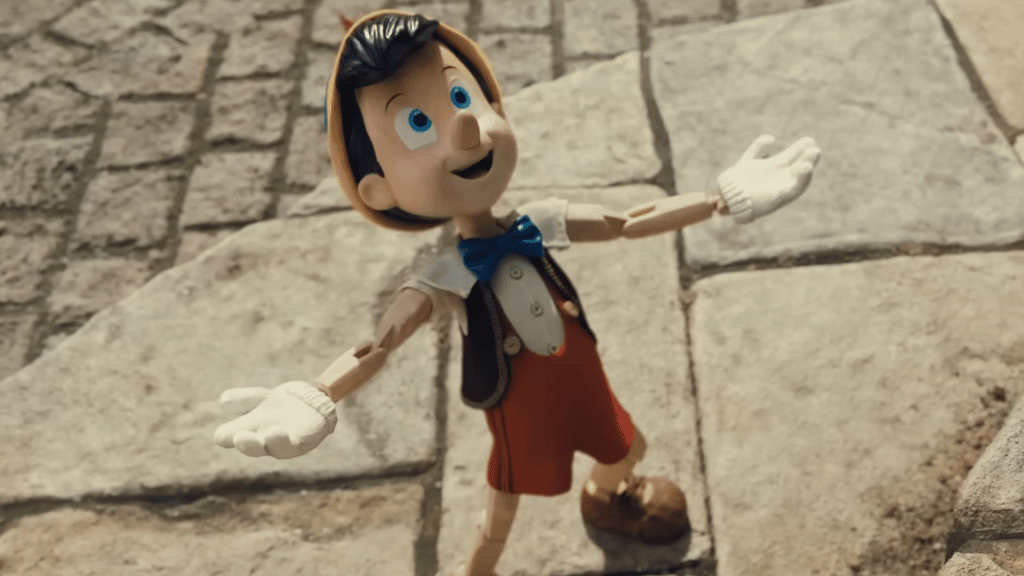
Pinocchio’s drive is based on the belief that he must be someone he isn’t. This feeling of insecurity drives every decision he makes. What makes him want to go to school? That’s what “real boys” do. Why is he willing to leave Honest John (Keegan Michael Key) and make the place famous? Don’t all “real” boys dream of becoming celebrities? Poor Pinocchio is clearly suffering from imposter syndrome.
He is continually being pulled in many directions by Geppetto from the moment he steps out on Geppetto’s front step in an attempt to find the best way to become a “real boy”. He misses important life lessons, such as the fact that all “real” people strive to be more than they are, or that his ability to love is another aspect of what makes him “real”.
He feels like a fraud and who can blame him? He is thrown out of school by his teacher, who claims that school is only for real kids and not puppets. The entire show is based on the idea that a puppet doesn’t need strings and he can dance at Stromboli’s show. He refuses to leave Pleasure Island for home and instead chooses to stay, even though he has the option to do so.
See also: Loot Season 1 Episode 10 “The Silver Moon Summit” Review & Ending Explained?
Growing up is not easy

The most fascinating thing about Pinocchio’s story is how similar it is to the journey we all take to become adults. Although we’re not all forced into servitude in a traveling puppet show run by a man, or partially turned into donkeys or swallowed up by a giant sea monster, we all fall for the temptation to follow the easy path to fame and fortune. We all make many mistakes.
The majority of the film is set in one day, which Geppetto calls a little unbelievable. However, Pinocchio does a lot of growing up in that short time. He begins the story as a newborn and imitates everyone until he is able to speak and stand on his feet. He enters adolescence and begins to make friends as well as enemies. He meets Sabina (Jaquita Ta’le) and puberty has begun. This is why he falls in love with her puppet.
Pleasure Island is his high school years. He drinks, plays pool, takes aim at authority and transforms into a different version of himself. When he finally reunites with Geppetto, it’s clear that he is graduating and entering adulthood. This is the reason why the film ends when he does: Pinocchio is grown up.
Your conscience should always be your guide

Jiminy, a talking cricket, is the narrator. After seeing the lights on, he wanders into Geppetto’s house and discovers that it was one of the most important decisions in his life. It’s not stated in detail or explored with much depth, but it is obvious from his worn clothes and outlook on the world that Jiminy knows a lot about people and where they are going wrong. This makes him an ideal temporary conscience for Pinocchio.
He is qualified to help Pinocchio go in the right direction but circumstances make it difficult for him. He is almost run over by a wagon and gets stuck in a jar. He is not always physically there, but that doesn’t mean that he hasn’t had an impact on Pinocchio.
Pinocchio would not have survived the world without Geppetto’s help if he hadn’t been there. He would have followed Honest John without second thoughts, worked for Stromboli forever, and never again seen his father. Jiminy had already told him from the beginning that not all people are trustworthy, and that lesson stayed with Pinocchio until the end.
Accepting peer pressure

Pinocchio’s darkest moment is when he goes to Pleasure Island along with a group of lost children. As he steps onto the street, he is swooped by a speeding car. Based on his lessons from Jiminy, and his past experiences, he is aware that something is not right with Coachman (played brilliantly by Luke Evans), and his promises to take them and others to the best place on Earth, but he does not have the confidence to speak up for himself.
The Coachman offers him the chance to choose to stay or go. He sings a song about “real” children who want to live without parents and where they can indulge in their desires without fear of punishment. He admits that he made a mistake but doesn’t care. Everything seems to be as exciting and magical as it was in the beginning, but things quickly change.
It was all a scheme for lost children to become donkeys that could be used in a salt mine. Shadowy, monstrous characters take them by the boatload and nearly take Pinocchio. He gives in to peer pressure and flees to safety. He will not make the same mistakes again.
Fake friend, but real

Sabina, a singer, dancer, and puppeteer, works for Stromboli. She dreams of owning a show. She’s stuck with this horrible man, and has a leg brace. She doesn’t let this stop her from performing. This is a clear parallel to Pinocchio’s self-perceived flaws. Sabina will not let her leg or any other situation keep her from breaking free. It’s not impossible for her to break out on her own, but it will take more time than she expected. She knows that there is nothing wrong with her, but Pinocchio believes she needs to change.
See also: Disappearance at Clifton Hill Ending Explained : What’s Happened ?
Pinocchio has met two people who have abused and lied to him. He is captivated when she uses a puppet to communicate with him. This is another example of how perceptions can determine what’s true and false.
Pinocchio, like almost everyone else in the film, believes he’s not “real” despite all evidence to the contrary. He can only trust Sabina’s puppet because she isn’t real. He is actually speaking to Sabina and therefore trusts her as a human. This is important because he can give up everything to be with Sabina, her puppet, and he gives up his chance to save Geppetto.
Learn from your mistakes

Pinocchio is now faced with some very difficult decisions after all the chaos he has experienced. First, he must decide whether to accept Sabina’s offer to run their puppet show. She doesn’t ask him to do this out of malice or greed, but she believes it would be a great move for Pinocchio. This would allow him to be himself and celebrate what makes him unique. Instead, he decides to ski across the ocean in search of his father.
The fact that Pleasure Island’s donkey ears and tail vanished proves that this was a selfless decision. He rides out to meet Geppetto and both are swallowed by Monstro, the sea monster. He could just sit and feel sorry for himself, but instead he jumps into action. He dances for Stromboli so fast, the friction creates a fire. To set a fire, he does it again. This would make Monstro cough and send them back out to sea.
See also: When Will Inside Man Season 2 Release Date?
Pinocchio and Monstro have only half a boat to keep them afloat. Pinocchio uses his legs to propel them towards shore with Monstro following closely behind. These choices are a reflection of his character growth. He is no longer satisfied with following the advice of others. Instead, he takes initiative.
Braver than the average boy

Pinocchio must demonstrate bravery as one of his traits. To be a “real boy”, he must show that he is able to pursue a goal even when faced with fear. This is what courage and bravery are all about. He was completely unaware of all the dangers that he might face when this amazing day began. He doesn’t have anything to fear so you can’t call him brave.
We don’t see him face fear until Stromboli puts him in a cage, and tells him that he will never return home. Stromboli initially told him that he could return home after performing for him. He is now hurt by the lie and angry at himself. He is terrified of Pleasure Island for the majority of his time. These big, rowdy children love to fight, talk back and gamble. He is way out of his element.
There’s also his escape from Monstro. The “real” boy would have a heart attack and not be able to think clearly enough to find a way out from the sea monster’s stomach. Pinocchio has proved his bravery again and again. He saved his father, even though he believed there was a chance that he might never accept him as “real.”
It was a real tear!
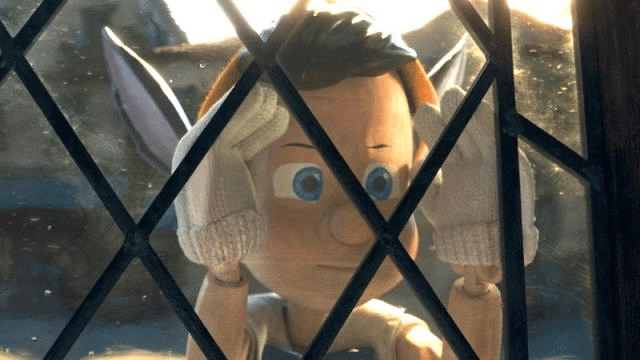
In the last moments of the film, the line between real and fake blurs even more. Pinocchio escapes Monstro using his own creativity, as we have already seen. Half of a small boat is all they have to save them from drowning once he, Jiminy (the fish), Geppetto (the cat), Figaro (the cat), Cleo [the goldfish]) and Geppetto (the mouse) have returned to relative safety in the open ocean. Pinocchio quickly reacts to Monstro’s pursuit and beats his legs like a propeller to speed them along the waterline to shore.
They crash on the shore and fly away. Geppetto is the only one who seems to be having trouble breathing. He lies there, his lungs filled with water and unable to breathe. Pinocchio believes that his father has died. Pinocchio begins to cry, desperate to help but without the means. A real tear is formed in one of his painted eyes, and it falls onto Geppetto’s fleshy cheek.
This is the first sign Pinocchio is “real”. Wood cannot cry. Wood can’t cry. You could argue that wood cannot walk or talk. But, at no time in the movie before this point did Pinocchio produce any sweat, saliva or other bodily fluid. He has shown himself to be “real” at this point and a convincing tear was formed that saved his father from certain death.
A real boy
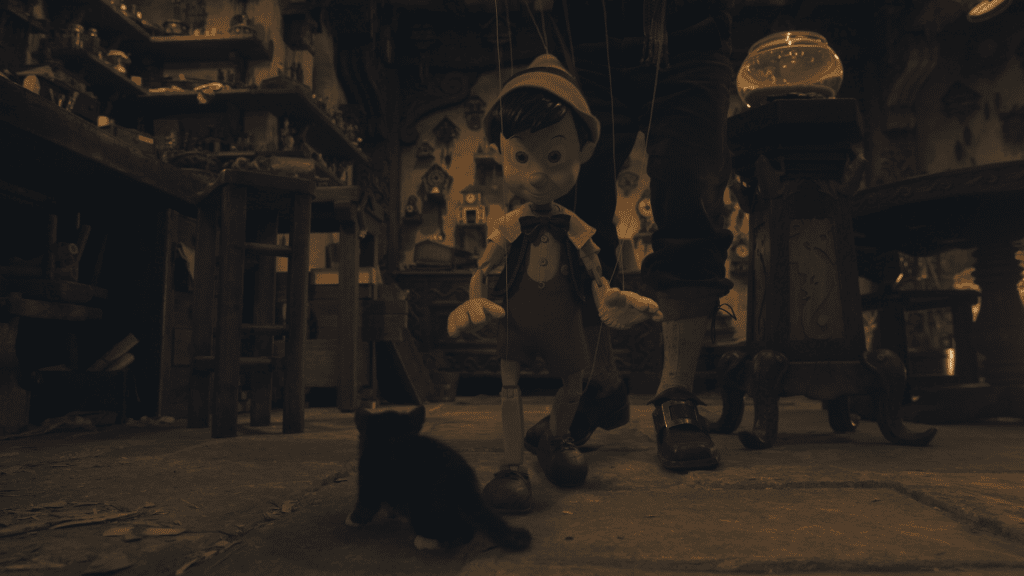
At the beginning of this story, we said that Pinocchio’s transformation was as much about looking inwardly at himself than it is about looking outwardly at the world. Geppetto’s last speech to his son is a clear example of this. Geppetto, when he is brought back to life again, is so impressed by the work of Pinocchio that he remarks that no real boy could ever have done it. Pinocchio views this compliment as confirmation that his father doesn’t want him to do what he wants.
Geppetto finally tells Pinocchio the truth. He states that Pinocchio tried his best to be a boy, which made him brave, honest, and truthful. He now realizes the mistakes he made. He shouldn’t have made Pinocchio think less of himself, since Pinocchio is perfect as he is.
See also: When Pretty Little Liars: Original Sin Season 2 Release Date ?
Jiminy says that some believe Pinocchio was literally transformed into a person. The visuals suggest this, but it’s deliberately vague. Why? It doesn’t matter. Geppetto accepts Pinocchio for who he really is, and that’s all Pinocchio ever wanted.